What Does OK Mean in Texting Rude or Normal?2026
🎯 Rizz Generator
You send a message, get a simple “OK” back, and suddenly your brain starts overthinking: Wait… was that rude? Are they mad? Or is it just normal texting? If you’ve ever wondered what does OK mean in texting rude or normal, you’re definitely not alone.
In digital conversations, tiny word choices can carry big emotional weight. A short reply like “OK” may seem harmless, but depending on context, tone, punctuation, and relationship dynamics, it can sound neutral, passive-aggressive, dismissive—or completely fine. For Gen Z, bloggers, and everyday texters, decoding text tone has become a modern survival skill.
This guide breaks down exactly what “OK” means in texting, when it sounds rude, when it’s perfectly normal, and how to interpret it without spiraling into message anxiety.
What Does OK Mean in Texting: Rude or Normal in Everyday Conversations?
The short answer: “OK” is usually normal—but context changes everything.
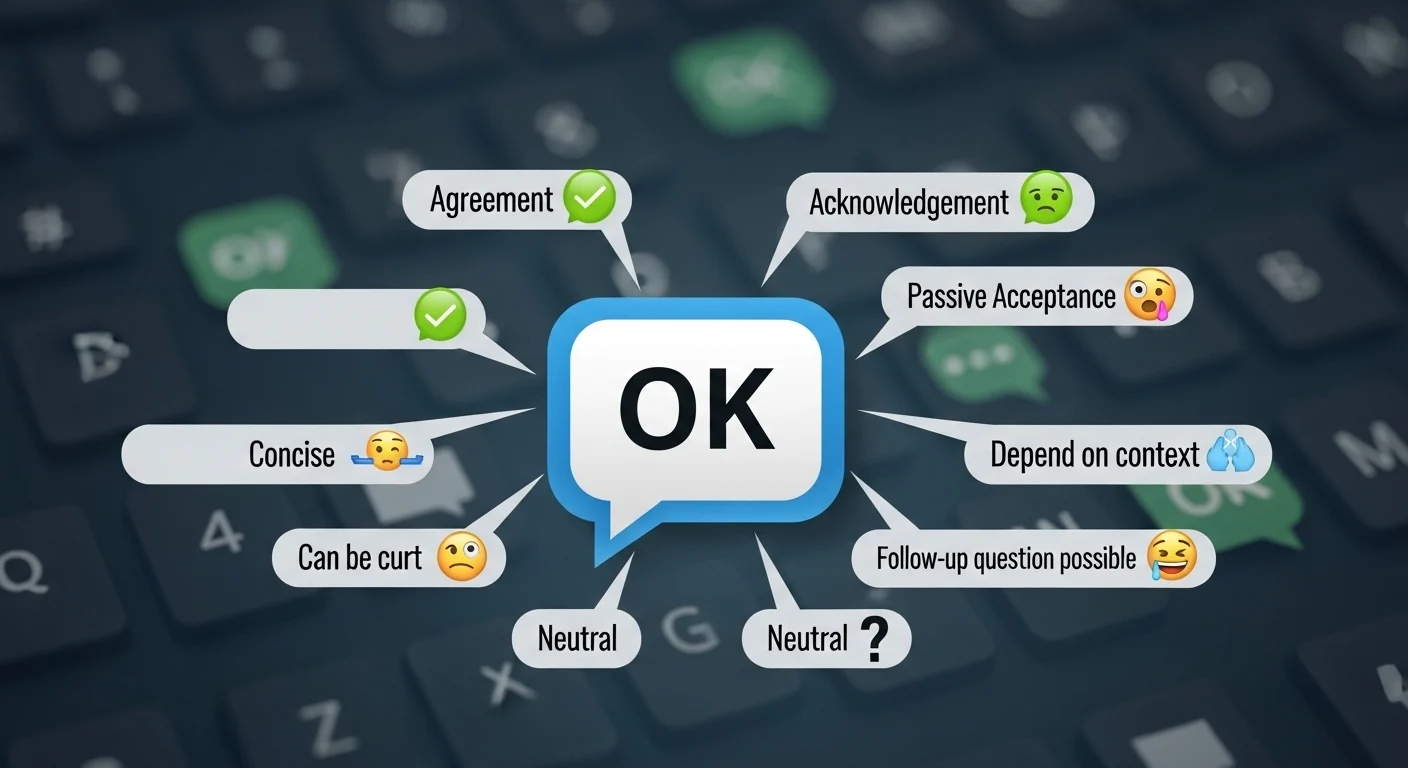
“OK” is one of the most common text responses in the world. It often simply means:
- I understand
- I agree
- Message received
- That’s fine
However, because texting lacks vocal tone and facial expressions, the same “OK” can feel cold depending on how it’s written.
When “OK” Feels Normal
Examples where “OK” sounds neutral:
Conversation Example 1:
- Alex: “Meeting starts at 3 PM.”
- Sam: “OK”
This is efficient and totally normal.
When “OK” Might Feel Rude
Example:
Conversation Example 2:
- Mia: “Sorry I forgot your birthday dinner.”
- Jake: “OK.”
That period changes everything. Suddenly it may feel tense or emotionally distant.
Quick Rule:
If the conversation is factual, “OK” is usually neutral.
If emotions are involved, “OK” may sound dismissive.
The History Behind “OK” and Why Tone Gets Misread in Texting
Before analyzing rudeness, it helps to understand where “OK” comes from.
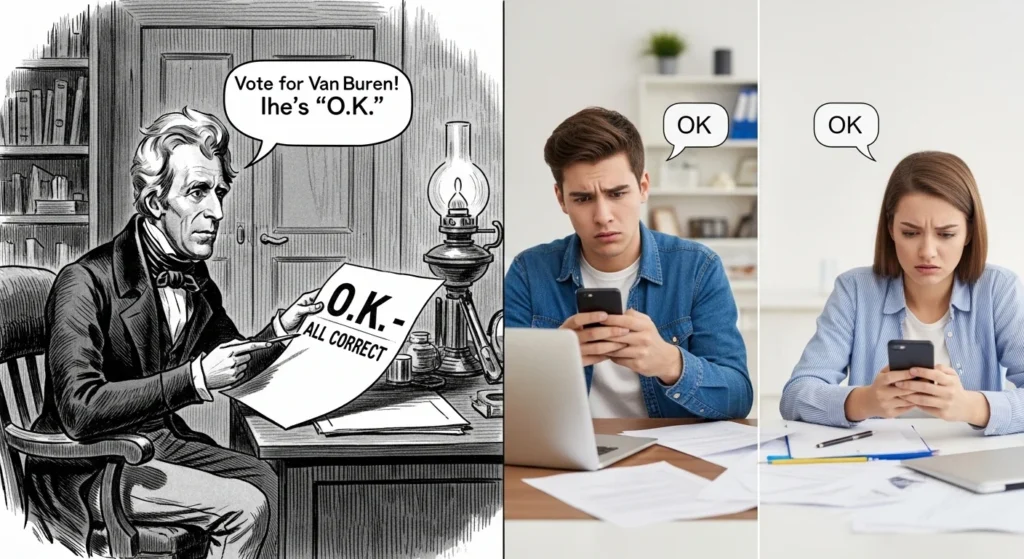
“OK” dates back to the 1830s and became popular as shorthand for “oll korrect” (a humorous misspelling of “all correct”). Today, it’s one of the most universally recognized words.
According to dictionaries like Merriam-Webster, OK generally means:
- Acceptance
- Approval
- Agreement
Why Texting Changes Meaning
In face-to-face speech, tone helps clarify intent.
Compare:
| Same Word | Spoken Tone | Perceived Meaning |
|---|---|---|
| OK | Cheerful voice | Friendly |
| OK | Flat tone | Indifferent |
| OK | Sharp tone | Angry |
In texting, readers invent tone themselves—which causes misunderstandings.
Visual Content Idea:
Infographic showing how punctuation changes “OK” tone:
- OK
- ok
- Okay!
- Ok…
- OK.
Is Saying “OK” in Texting Rude? Context Matters Most
The biggest factor in answering is saying OK in texting rude is context.
Factors That Affect Meaning
1. Relationship With the Person
A best friend texting “ok” feels different from your boss texting “OK.”
2. Message Before It
What came before matters.
Example:
- “Can you send me the file?”
→ “OK” = normal
But:
- “I’m upset about what happened.”
→ “OK” may feel insensitive
3. Capitalization
Different forms imply different emotional tones:
- ok = casual
- OK = neutral/formal
- Okay = warmer
- Okkk = playful
- K = often rude or abrupt
4. Punctuation
- OK = neutral
- OK. = colder
- OK! = enthusiastic
- OK…? = confused or skeptical
Mini Dialogue Example
Neutral:
- Chris: “Dinner at 8?”
- Taylor: “OK!”
Potentially rude:
- Chris: “Can we talk about what happened?”
- Taylor: “OK.”
Same word, different vibe.
What Does “OK” Mean From Different People in Text Messages?
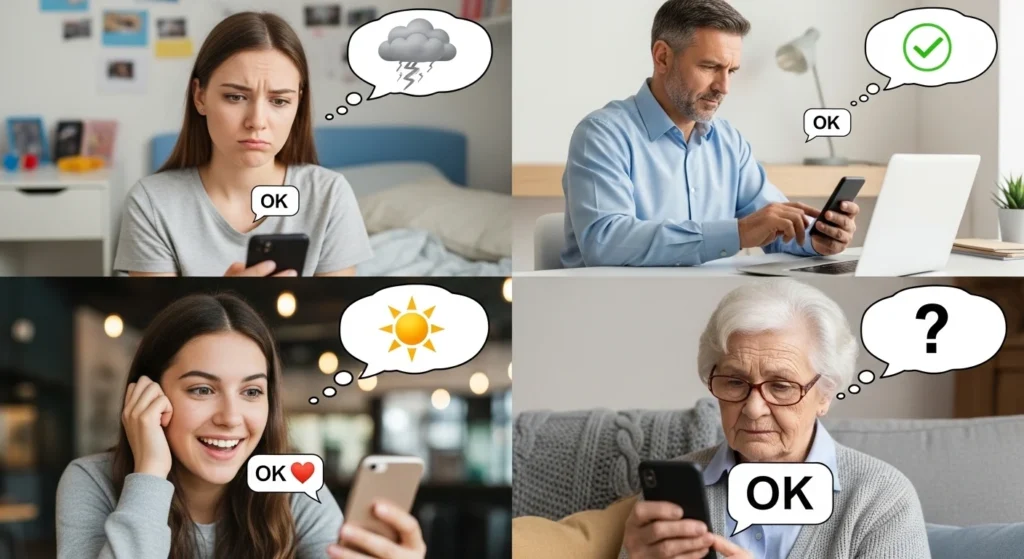
Not everyone uses texting language the same way.
If Your Friend Says “OK”
Usually casual, harmless, and neutral.
If Your Crush Says “OK”
This may trigger overanalysis—but pause first.
Could mean:
- They’re busy
- They’re distracted
- They’re uninterested
- They’re upset
Need more clues before assuming.
If Your Boss Says “OK”
Usually professional acknowledgment, not emotional.
Example:
- “Please review the report.”
- “OK”
That’s business communication, not attitude.
If Parents Text “OK”
Parents often text simply and directly. No hidden drama required.
Tip:
Look at texting patterns, not isolated messages.
Signs “OK” Is Actually Passive-Aggressive in Texting
Sometimes, yes—“OK” can absolutely carry attitude.
Red Flags That “OK” Might Be Rude
Watch for these clues:
- Sudden one-word replies after long messages
- Change in tone from normal texting style
- Added period (“OK.”)
- Repeated delayed responses
- Paired with cold silence afterward
Example Passive-Aggressive Exchange:
- Emma: “Sorry I canceled again.”
- Noah: “OK.”
That may imply:
“I’m annoyed but not saying it directly.”
Compare These Versions
| Text Reply | Likely Tone |
|---|---|
| OK | Neutral |
| ok 🙂 | Friendly |
| OK. | Cold or annoyed |
| K | Abrupt |
| Okayyy | Playful |
Important Reminder:
Not every short reply is rude—some people are just brief texters.
How to Respond When “OK” Feels Rude in Texting
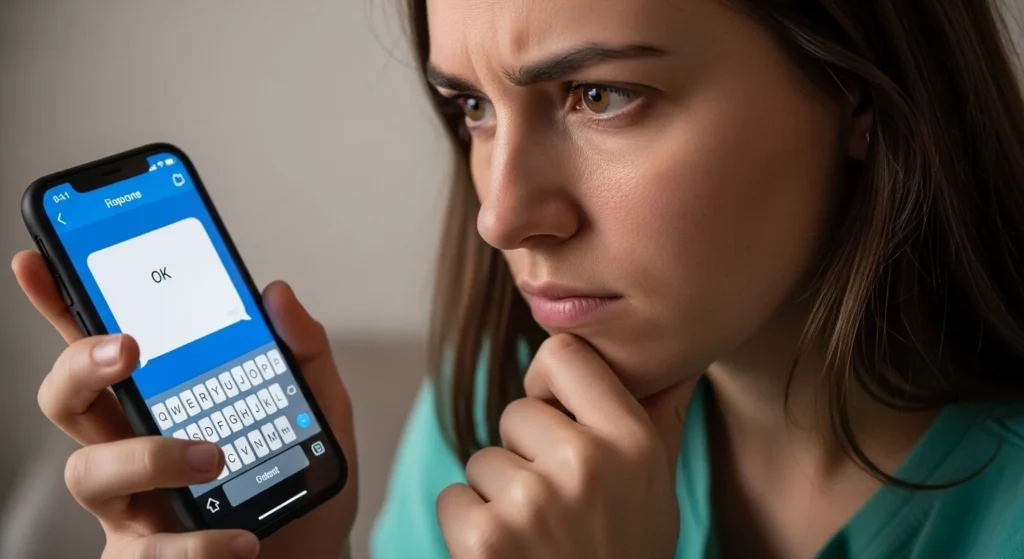
If “OK” sounds rude, don’t panic-text immediately.
Step-by-Step Response Guide
Step 1: Pause Before Assuming
Ask yourself:
- Are they busy?
- Are they naturally short texters?
- Am I reading emotion into plain text?
Step 2: Check Context
Review earlier messages.
Step 3: Clarify Calmly
Example:
“Hey, just checking—everything okay?”
Step 4: Avoid Overreacting
Don’t respond with:
- “Why are you mad?”
- “What’s your problem?”
That escalates misunderstandings.
Better Response Examples
Instead of:
“Wow rude.”
Try:
“Got it! Let me know if you need anything else.”
Common Mistakes People Make When Interpreting “OK” in Texts
Mistake #1: Overanalyzing One Word
Sometimes “OK” just means… OK.
Mistake #2: Ignoring Communication Style
Some people hate typing long messages.
Mistake #3: Assuming Tone Without Evidence
Text lacks vocal nuance.
Mistake #4: Reading Punctuation Too Literally
Not everyone uses punctuation emotionally.
Example:
Some people always write:
“OK.”
without meaning anger.
Key Takeaways: Is “OK” Rude or Normal?
- “OK” is usually neutral and normal
- Context determines tone
- Punctuation changes perception
- “K” often feels ruder than “OK”
- Relationship matters in interpretation
- Don’t assume negativity without patterns
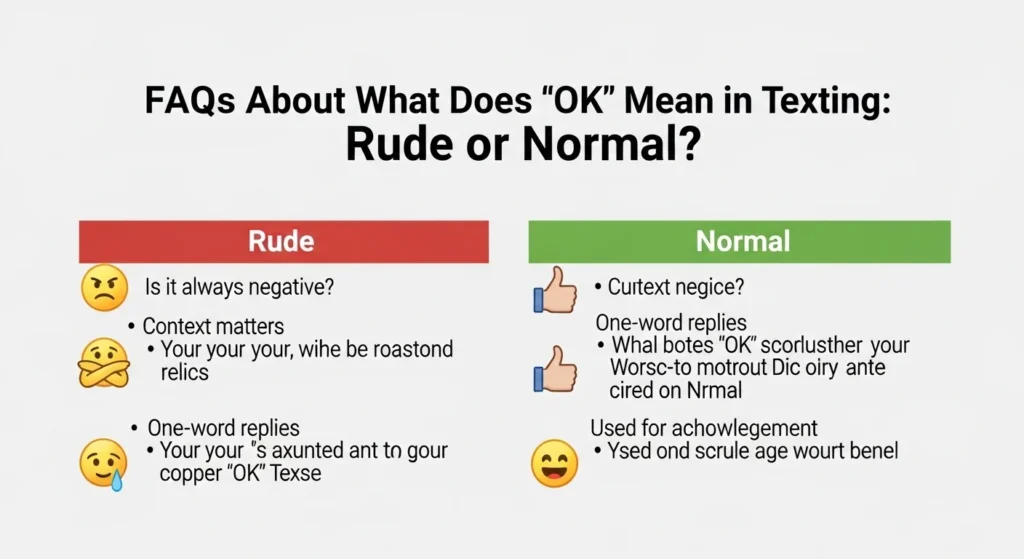
FAQs About What Does OK Mean in Texting Rude or Normal
1. Is saying “OK” in texting rude?
Not usually. “OK” is generally neutral unless context makes it seem dismissive.
2. Why does “OK.” feel rude?
The period can make the message sound colder or emotionally distant.
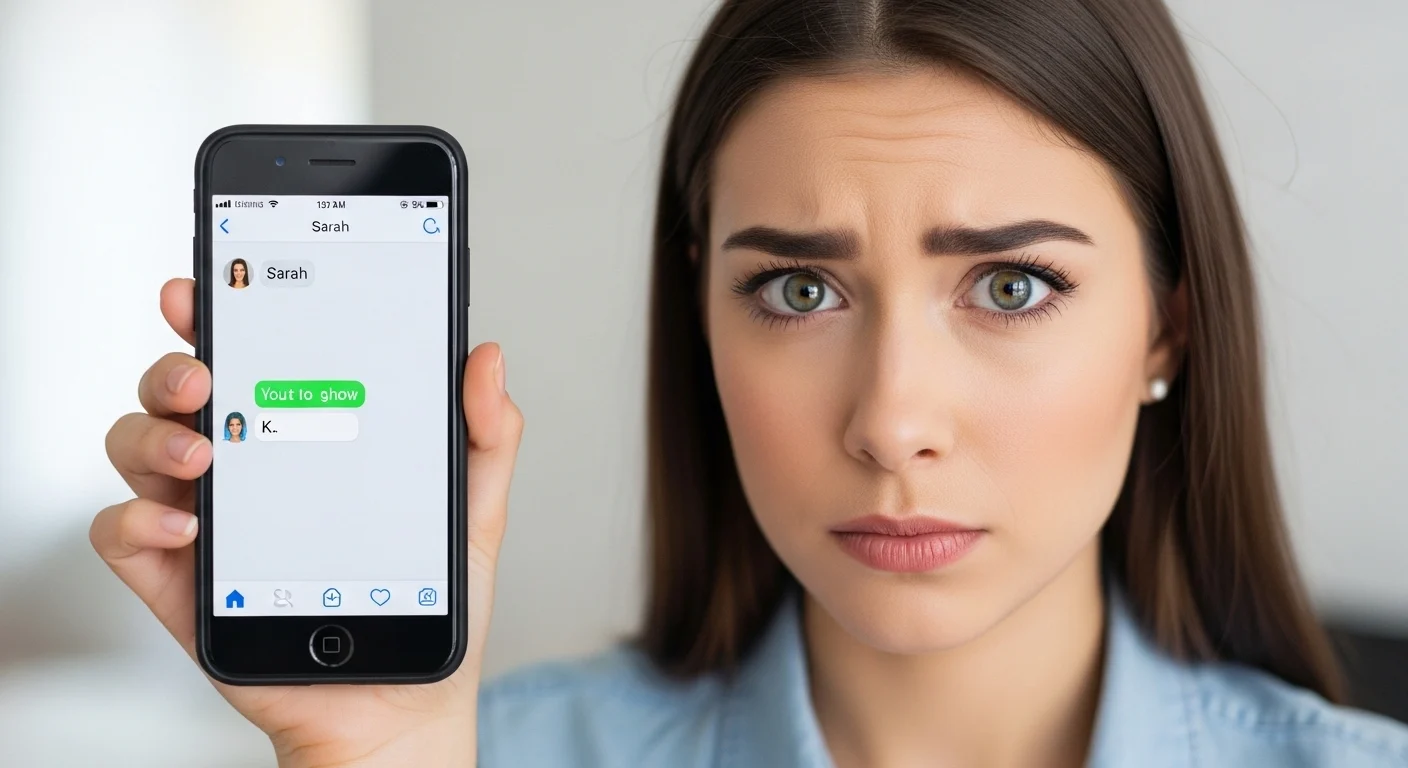
3. Is “K” ruder than “OK”?
Yes, many people perceive “K” as more abrupt and dismissive.
4. What does it mean when a girl texts “OK”?
It depends on context, mood, and her usual texting style.
5. What does it mean when a guy replies only “OK”?
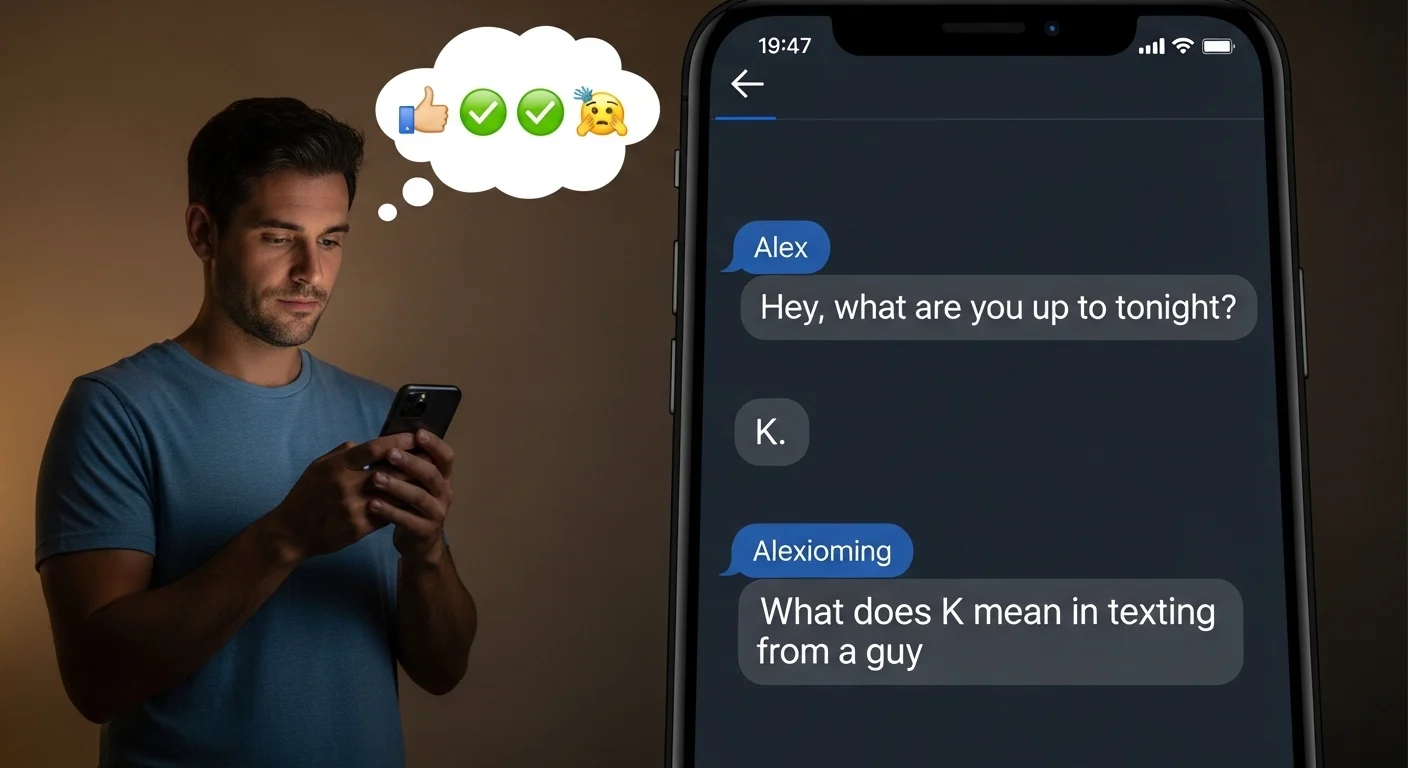
It may mean acknowledgment, distraction, annoyance, or brevity—context matters.
6. Is “Okayyy” better than “OK”?
Usually yes. It sounds warmer, playful, and friendlier.
7. Should I worry if someone texts just “OK”?
Not automatically. Look for patterns before assuming emotional meaning.
Conclusion
So, what does OK mean in texting rude or normal? Most of the time, it’s perfectly normal. “OK” is a standard acknowledgment that simply confirms receipt or agreement. But in emotionally sensitive conversations, punctuation, timing, and tone can make it feel rude or passive-aggressive.
The golden rule: don’t judge one “OK” in isolation. Look at the bigger conversation, the sender’s habits, and the relationship dynamic. Texting tone is messy—but understanding context saves a lot of unnecessary overthinking.
Discover more post
What Does Hmm Mean in Texting From a Guy? Decoding the Real Meaning Behind “Hmm”2026

Creal Wood is a creative writer and digital expression enthusiast known for breaking down the deeper meaning and impact of modern text forms, from powerful written messages to the fast-moving world of internet memes. With a passion for exploring how words shape emotion, culture, and humor, Creal blends thoughtful analysis with a playful approach that makes complex ideas easy to understand.
Specializing in text symbolism, meme culture, visual linguistics, and communication trends, Creal studies how people use short phrases, captions, and visuals to express identity, humor, and social commentary in today’s online world. Their work uncovers the hidden layers behind everyday posts, explaining how meaning evolves as memes spread, transform, and reshape digital expression.
Whether breaking down literary themes, decoding meme formats, or examining how language adapts to new platforms, Creal Wood brings a unique voice that bridges academic insight with modern creativity. Their writing is engaging, insightful, and designed to help readers understand not just what a message says, but what it means.










Post Comment