What Does LOL Mean When Not Funny? Understanding the Hidden Meaning Behind the Text 2026

Have you ever received a text that simply ends with “lol” — even though nothing in the conversation was remotely funny? You’re not alone. If you’ve ever wondered what does LOL mean when not funny, the answer is more nuanced than “laughing out loud.”
In modern texting culture, especially among Gen Z and millennials, “LOL” has evolved far beyond actual laughter. It can soften awkward messages, reduce tension, signal politeness, or even hide discomfort. What once meant genuine amusement now often acts as emotional punctuation in digital conversations.
In this article, we’ll break down the hidden meanings of LOL when it’s not used for humor, explore real-life examples, explain texting psychology, and help you decode what people really mean when they type “lol.”
What Does LOL Mean When Not Funny in Texting?
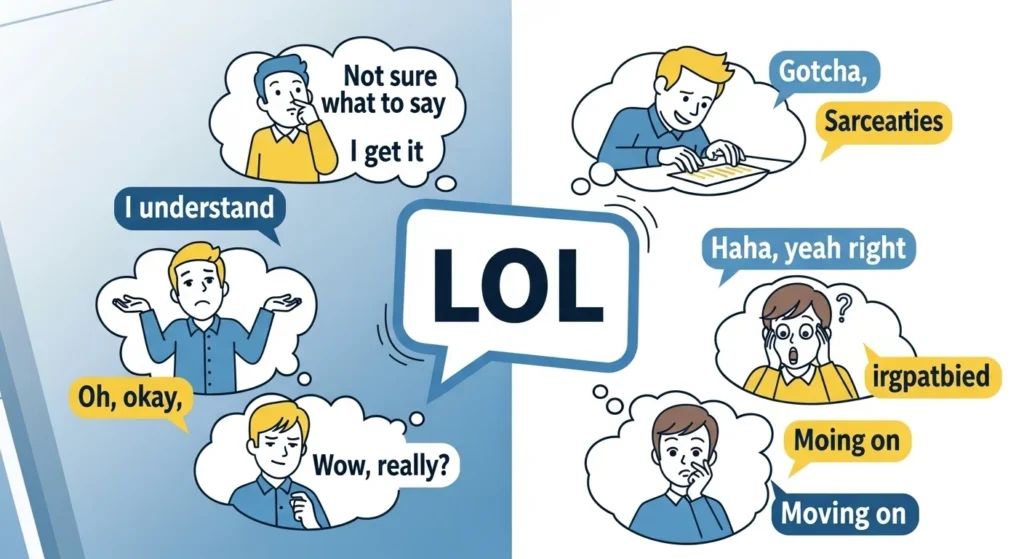
Originally, LOL stood for “Laughing Out Loud.” In the early days of internet chatrooms, it was used literally to show laughter.
Today, however, LOL has become a flexible texting tool with several meanings unrelated to humor.
Common Non-Funny Meanings of LOL
When someone uses LOL and nothing is funny, they may mean:
- “I’m trying to sound casual.”
- “This is awkward.”
- “Please don’t take this too seriously.”
- “I’m being polite.”
- “I feel uncomfortable.”
Example:
Text: “I forgot your birthday lol”
Here, “lol” doesn’t mean laughter. It softens the confession and reduces awkwardness.
Why This Happens
Language evolves. Just like emojis can mean different things depending on context, LOL has shifted into a tone marker rather than a literal reaction.
The Evolution of LOL: From Real Laughter to Emotional Filler
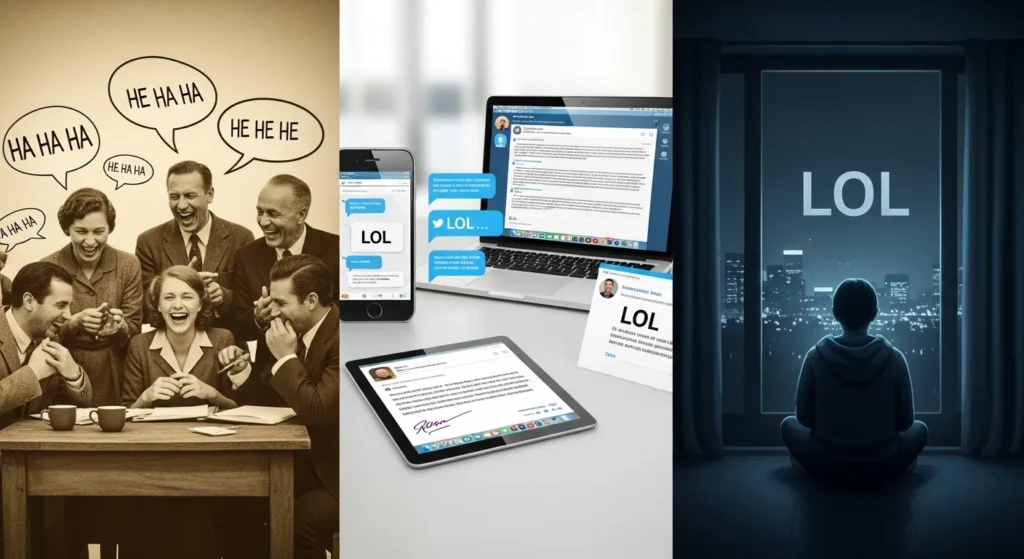
Understanding what does LOL mean when not funny requires looking at how internet slang changed over time.
Early Internet Meaning
In the 1990s and early 2000s:
- LOL = genuine laughter
- Mostly used in chatrooms and instant messaging
Example:
“That meme is hilarious LOL!”
Modern Meaning in Gen Z Text Culture
Now LOL often works like punctuation.
Instead of laughing, it may:
- Make messages seem friendlier
- Prevent texts from sounding cold
- Add emotional tone
Example:
“Sure lol”
This could mean:
- Mild annoyance
- Passive agreement
- Sarcasm
LOL vs Other Similar Expressions
| Expression | Original Meaning | Modern Meaning |
|---|---|---|
| LOL | Laughing Out Loud | Tone softener |
| LMAO | Laughing My Ass Off | Exaggerated reaction |
| Haha | Genuine amusement | Friendly warmth |
| LMK | Let Me Know | Neutral request |
Hidden Meanings Behind LOL When Nothing Is Funny
There are several subtle emotional signals behind LOL usage.
1. LOL as Politeness Buffer
People use LOL to make blunt statements sound softer.
Example:
“I can’t make it tonight lol”
Without LOL:
“I can’t make it tonight.”
This sounds colder.
2. LOL as Awkwardness Shield
When someone feels uncomfortable, LOL reduces tension.
Example:
“That was embarrassing lol”
3. LOL as Passive-Aggressive Tone
Sometimes LOL hides irritation.
Example:
“Wow you replied after three days lol”
Translation:
They may actually be annoyed.
4. LOL as Sarcasm Marker
Used to signal irony.
Example:
“Yeah because that worked so well last time lol”
5. LOL as Emotional Distance
Sometimes people use LOL to avoid vulnerability.
Example:
“I kinda miss you lol”
The LOL protects emotional exposure.
How to Tell What LOL Means in Context
Because LOL can mean many things, context matters.
Look at These Clues:
Tone of Conversation
Is the message:
- Friendly?
- Awkward?
- Tense?
Relationship with Sender
A close friend’s LOL differs from a coworker’s LOL.
Sentence Placement
- Beginning: playful opener
- Middle: softener
- End: emotional cushion
Mini Dialogue Examples
Friendly LOL:
Alex: “You’re late again lol”
Meaning: playful teasing
Awkward LOL:
Jamie: “I accidentally sent that to my boss lol”
Meaning: embarrassment
Sarcastic LOL:
Taylor: “Great, another Monday meeting lol”
Meaning: frustration
Common Mistakes When Interpreting LOL
Misreading LOL can cause confusion in texting.
Mistake #1: Taking It Literally
Not every LOL means laughter.
Wrong assumption:
“They think this is funny.”
Possible real meaning:
“They’re nervous.”
Mistake #2: Ignoring Tone Context
Always read surrounding words.
Example:
“Fine lol”
Could mean:
- Actual acceptance
- Hidden annoyance
Mistake #3: Overanalyzing Every LOL
Sometimes LOL is just habit.
Many people type LOL automatically without deep meaning.
Mistake #4: Misreading Romantic Signals
Example:
“Miss you lol”
This may be flirtation—or emotional caution.
Tip: Don’t interpret LOL alone; analyze the whole conversation.
How Gen Z Uses LOL Differently Than Older Generations
Gen Z has transformed LOL into a conversational mood marker.
Gen Z Usage Trends
Among younger texters, LOL often means:
- Social cushioning
- Anti-seriousness marker
- Casual emotional filler
Millennials vs Gen Z LOL
| Generation | Typical LOL Meaning |
|---|---|
| Millennials | Actual laughter + friendliness |
| Gen Z | Tone control + irony |
Popular Alternatives Gen Z Uses
- lmao
- help
- crying
- dead
- pls
Example:
Instead of:
“That’s funny lol”
Gen Z may say:
“I’m dead”
Key Takeaways: What Does LOL Mean When Not Funny?
- LOL no longer always means real laughter.
- It often softens tone in texting.
- It can signal awkwardness, sarcasm, politeness, or discomfort.
- Context determines meaning.
- Gen Z uses LOL more as emotional punctuation than literal laughter.
FAQs About What Does LOL Mean When Not Funny
1. What does LOL mean when not funny in texting?
It usually acts as a tone marker, making messages sound softer, less awkward, or less serious.
2. Why do people say LOL when nothing is funny?
People use LOL to reduce tension, sound polite, avoid awkwardness, or add casual emotion.
3. Is LOL passive-aggressive sometimes?
Yes. Depending on context, LOL can hide sarcasm or mild annoyance.
Example:
“Nice of you to finally reply lol”
4. Does LOL mean someone is uncomfortable?
Sometimes. In awkward or embarrassing situations, LOL can signal nervousness.
5. What does it mean if a guy says LOL after serious texts?
He may be trying to lighten emotional intensity or avoid sounding too vulnerable.
6. Is LOL flirting?
Occasionally. In flirty texts, LOL can soften romantic statements.
Example:
“You looked cute today lol”
7. Is LOL outdated now?
Not entirely. While some slang evolves, LOL remains widely used across age groups.
Conclusion: LOL Means More Than Laughing Now
So, what does LOL mean when not funny? In today’s texting world, it often has little to do with laughter and everything to do with tone, emotion, and social nuance.
Whether it signals awkwardness, sarcasm, politeness, or emotional cushioning, LOL has become one of the internet’s most versatile texting tools.
Next time someone sends “lol,” don’t just ask, “What’s funny?” — ask yourself what they’re really trying to say.
Discover more post
What Does K Mean in Texting From a Guy? The Real

Creal Wood is a creative writer and digital expression enthusiast known for breaking down the deeper meaning and impact of modern text forms, from powerful written messages to the fast-moving world of internet memes. With a passion for exploring how words shape emotion, culture, and humor, Creal blends thoughtful analysis with a playful approach that makes complex ideas easy to understand.
Specializing in text symbolism, meme culture, visual linguistics, and communication trends, Creal studies how people use short phrases, captions, and visuals to express identity, humor, and social commentary in today’s online world. Their work uncovers the hidden layers behind everyday posts, explaining how meaning evolves as memes spread, transform, and reshape digital expression.
Whether breaking down literary themes, decoding meme formats, or examining how language adapts to new platforms, Creal Wood brings a unique voice that bridges academic insight with modern creativity. Their writing is engaging, insightful, and designed to help readers understand not just what a message says, but what it means.






Post Comment