What Does Sending Memes Instead of Replying Mean? (A Complete Guide to Modern Texting Behavior)
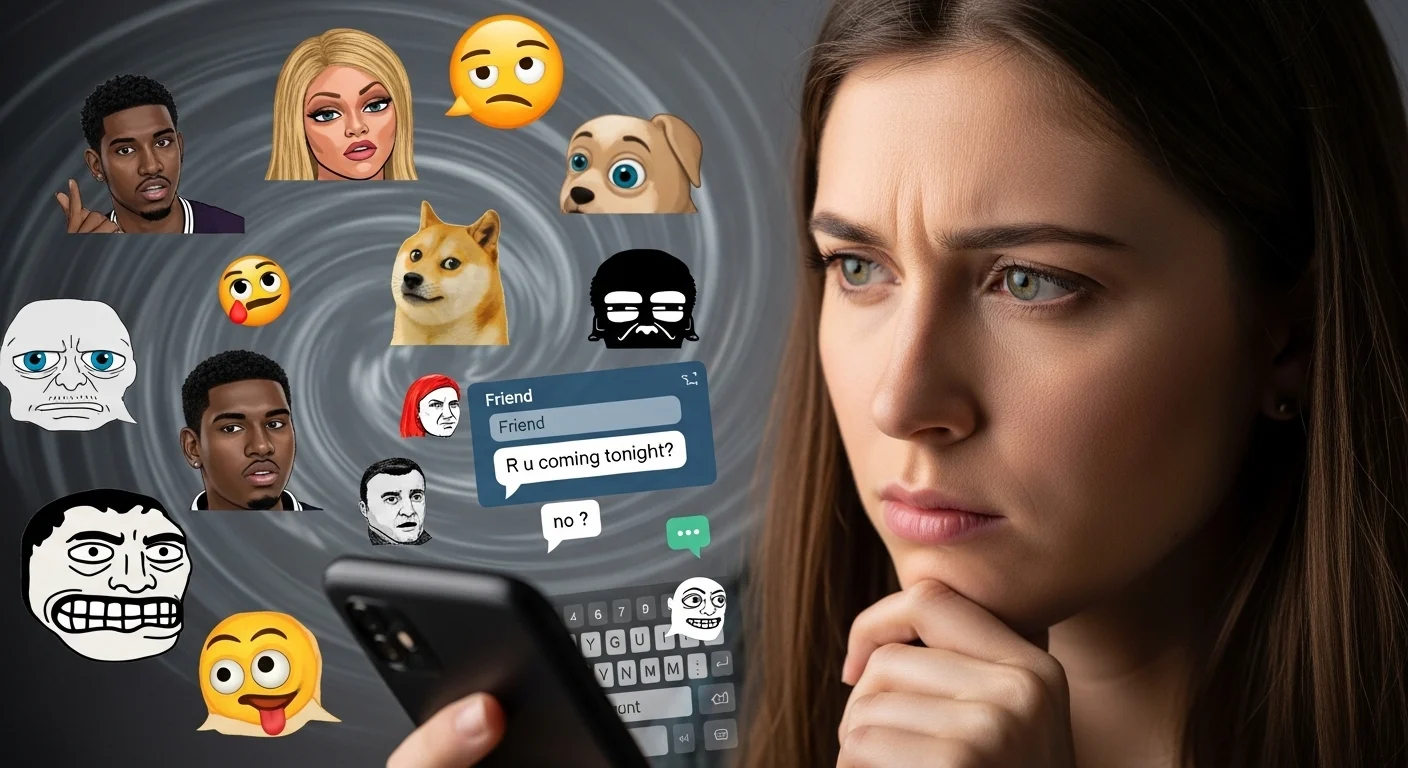
Ever sent someone a thoughtful message… and got a meme back instead of a real reply? You’re not alone. In today’s fast-paced digital world, what does sending memes instead of replying mean has become a surprisingly common question—especially among Gen Z and online communities.
Memes have evolved from simple jokes into a full-blown communication style. They can express emotions, avoid awkward conversations, or even replace entire sentences. But the meaning behind them isn’t always obvious. Is it playful? Passive? Flirty? Or just lazy?
In this guide, we’ll break down everything you need to know about this modern texting habit—from its meaning and psychology to real-life examples, benefits, and mistakes to avoid.
What Does Sending Memes Instead of Replying Mean in Texting?
At its core, sending memes instead of replying means someone is choosing visual humor or relatable content over a direct response. But the intent can vary depending on context, tone, and relationship.
Common Meanings Behind Meme Replies
- Avoiding a direct answer – They may not know what to say
- Keeping things light – Humor softens the conversation
- Showing interest indirectly – Especially in flirting
- Deflecting awkward topics – A subtle way to dodge
- Low-effort engagement – Minimal emotional investment
Quick Interpretation Table
| Situation | What It Likely Means |
|---|---|
| Serious question → meme reply | Avoidance or discomfort |
| Casual chat → meme reply | Playful engagement |
| Flirty convo → meme reply | Light teasing or interest |
| Emotional message → meme reply | Emotional unavailability or confusion |
Why Do People Send Memes Instead of Replying?
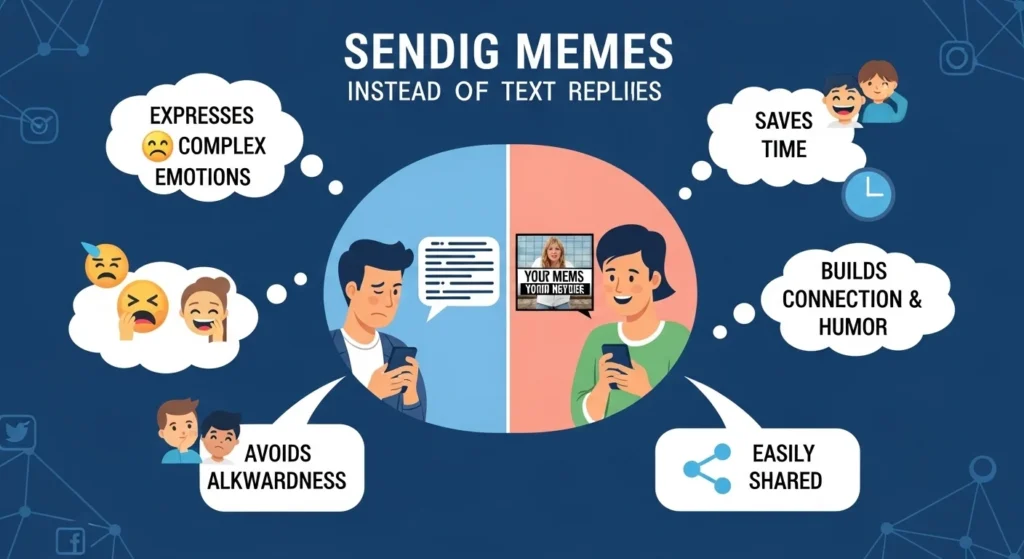
Understanding why people send memes instead of replying helps you interpret their intentions more accurately.
1. It’s Easier Than Typing a Response
Typing a thoughtful reply takes effort. A meme can say “same,” “lol,” or “I relate” instantly.
2. Memes Express Emotions Better
Sometimes a meme captures a feeling better than words ever could.
Example:
- You: “I’m so tired of everything lately.”
- Them: Sends a “this is fine” burning room meme
👉 Translation: “I feel that too.”
3. Avoiding Confrontation
Memes can soften or dodge serious conversations.
Example:
- You: “Why didn’t you reply earlier?”
- Them: Sends a confused SpongeBob meme
👉 Translation: “I don’t want to explain.”
4. Flirting Without Pressure
Memes are a low-risk way to flirt without being too direct.
5. Social Media Culture Influence
Platforms like Instagram, TikTok, and Snapchat have normalized meme-based communication.
Examples of Sending Memes Instead of Replying (Real Conversations)
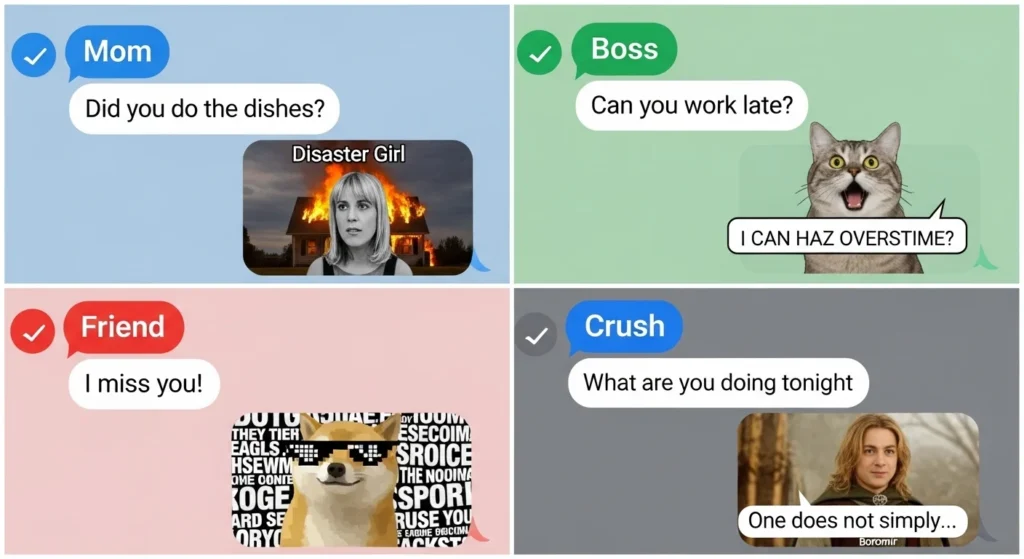
1. Playful Interaction
You: “You always ignore me 😤”
Them: Sends a cat hiding meme
👉 Meaning: Playful acknowledgment, not serious.
2. Avoiding a Question
You: “Are you mad at me?”
Them: Sends a random dancing meme
👉 Meaning: Dodging the question.
3. Flirty Energy
You: “Do you miss me?”
Them: Sends a clingy cartoon meme
👉 Meaning: Yes—but keeping it fun.
4. Emotional Disconnect
You: “I had a really bad day…”
Them: Sends a generic funny meme
👉 Meaning: Might not know how to respond emotionally.
Is Sending Memes Instead of Replying Good or Bad?
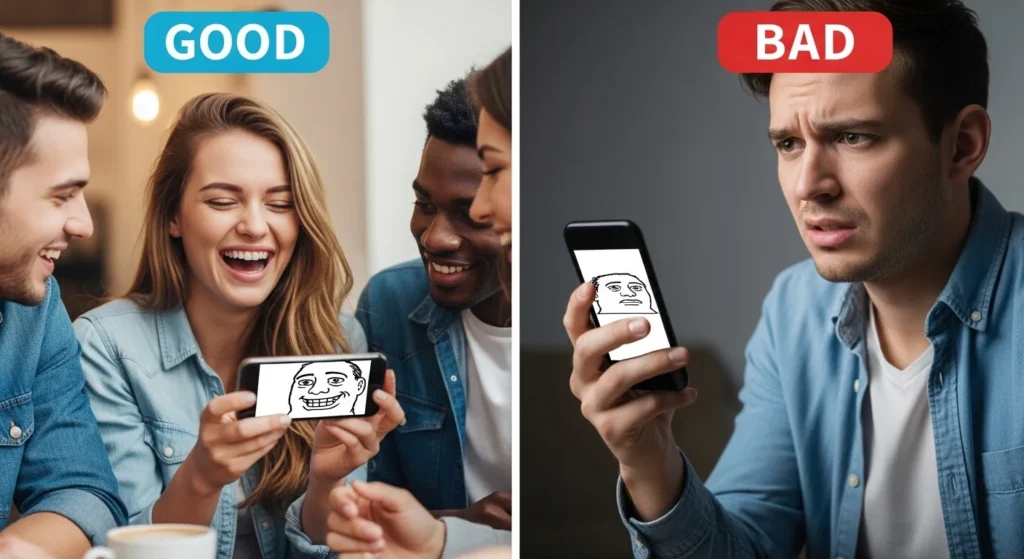
Like most digital behaviors, it depends on context.
Benefits of Sending Memes Instead of Replying
- Breaks awkward silence
- Adds humor to conversations
- Creates shared inside jokes
- Builds connection through relatability
- Keeps conversations casual and fun
Drawbacks to Watch Out For
- Can feel dismissive
- Avoids meaningful communication
- Leads to misunderstandings
- May signal lack of effort or interest
How to Respond When Someone Sends Memes Instead of Replying
If you’re unsure how to react, here’s a simple strategy.
1. Match Their Energy
If it’s casual, respond with another meme or light reply.
2. Redirect the Conversation
If you need a real answer:
“Lol that’s funny, but seriously—what do you think?”
3. Call It Out (Gently)
“You always reply with memes 😅 are you avoiding my question?”
4. Set Boundaries
If it bothers you:
“Hey, I’d prefer a real response when I ask something important.”
Common Mistakes When Interpreting Meme Replies
❌ Overthinking Every Meme
Not every meme has deep meaning. Sometimes it’s just humor.
❌ Ignoring Context
The same meme can mean different things depending on the conversation.
❌ Assuming Disinterest Immediately
Some people communicate primarily through memes—it’s their style.
❌ Expecting Emotional Depth from Everyone
Not everyone is comfortable expressing feelings directly.
Tips to Use Memes Effectively in Conversations
If you want to use this style without confusing people:
Do:
- Use memes to enhance, not replace, communication
- Match the tone of the conversation
- Use relatable, timely memes
- Follow up serious topics with real words
Don’t:
- Replace serious responses with memes
- Spam irrelevant memes
- Use memes to avoid accountability
- Ignore emotional cues
FAQs About Sending Memes Instead of Replying
1. What does sending memes instead of replying mean in texting?
It usually means the person is choosing humor or indirect communication instead of a direct response. It can signal playfulness, avoidance, or low effort depending on context.
2. Is sending memes instead of replying rude?
It can be, especially in serious conversations. However, in casual chats, it’s often seen as fun and engaging.
3. Why do guys send memes instead of replying?
Many guys use memes to express emotions indirectly, avoid awkwardness, or keep things light—especially in early-stage conversations.
4. Is sending memes a sign of interest?
Sometimes yes. In flirting, memes can be a playful way to show interest without being too direct.
5. What should I do if someone only sends memes?
Try redirecting the conversation or asking directly for a real response. If it continues, communicate your expectations clearly.
6. Can memes replace real communication?
Not entirely. While memes enhance conversations, meaningful communication still requires words—especially in deeper relationships.
Key Takeaways
- Sending memes instead of replying is a modern communication style
- It can mean humor, avoidance, flirting, or low effort
- Context is everything—tone + relationship = meaning
- Memes should complement, not replace, real conversation
- Clear communication still matters, especially in serious situations
Conclusion
So, what does sending memes instead of replying mean? It’s not just random humor—it’s a reflection of how digital communication is evolving. Memes can express feelings, avoid awkwardness, and even build connections—but they can also create confusion if overused.
The key is balance. Use memes to enhance your conversations, not replace them. And when in doubt, don’t hesitate to ask for clarity—because sometimes, a real reply is worth more than the funniest meme.
Discover more post
What Does Good Night Text Mean in Relationship? (A

Creal Wood is a creative writer and digital expression enthusiast known for breaking down the deeper meaning and impact of modern text forms, from powerful written messages to the fast-moving world of internet memes. With a passion for exploring how words shape emotion, culture, and humor, Creal blends thoughtful analysis with a playful approach that makes complex ideas easy to understand.
Specializing in text symbolism, meme culture, visual linguistics, and communication trends, Creal studies how people use short phrases, captions, and visuals to express identity, humor, and social commentary in today’s online world. Their work uncovers the hidden layers behind everyday posts, explaining how meaning evolves as memes spread, transform, and reshape digital expression.
Whether breaking down literary themes, decoding meme formats, or examining how language adapts to new platforms, Creal Wood brings a unique voice that bridges academic insight with modern creativity. Their writing is engaging, insightful, and designed to help readers understand not just what a message says, but what it means.







Post Comment