What Does Texting Then Stopping Mean? (Complete Guide to Sudden Silence in Chats) 2026
You’re mid-conversation, everything seems fine—and then suddenly… silence. No reply. No explanation. If you’ve ever wondered what does texting then stopping mean, you’re definitely not alone. In today’s fast-paced digital world, texting is one of the main ways we communicate, especially for Gen Z and millennials. So when someone suddenly stops replying, it can feel confusing, frustrating, or even personal.
But here’s the truth: texting behavior isn’t always straightforward. Sometimes it means something important, and other times it means absolutely nothing. In this guide, we’ll break down the real reasons behind texting then stopping, how to interpret it without overthinking, and what you should actually do next.
What Does Texting Then Stopping Mean? (Simple Explanation)
At its core, texting then stopping refers to a situation where someone is actively chatting with you and then suddenly stops replying—without warning or closure.
Common interpretations include:
- They got busy (most common)
- They lost interest in the conversation
- They got distracted
- They don’t know what to say next
- They’re intentionally pulling back
Quick Breakdown Table
| Situation | What It Might Mean |
|---|---|
| Stops mid-conversation | Distraction or interruption |
| Takes hours to reply later | Busy or multitasking |
| Never replies again | Possible ghosting |
| Replies dry after stopping | Lost interest |
Key takeaway: Not every pause is a red flag—but patterns matter.
Why Do People Text Then Stop? (Real Reasons Explained)
Understanding why someone texts then stops can save you from unnecessary stress and overthinking.
1. They Got Busy (The Most Innocent Reason)
Life happens—work, school, errands, or even just forgetting.
Example:
You: “What are you up to?”
Them: “Just got home from work—”
(No reply for 3 hours)
They probably got distracted, not disappeared emotionally.
2. They Lost Interest Mid-Conversation
Sometimes the conversation just… fizzles out.
Signs:
- Short replies before stopping
- No follow-up questions
- Lack of engagement
3. They’re Overthinking Their Response
Yes, people do this more than you think.
They might:
- Want to sound interesting
- Avoid saying the wrong thing
- Take too long to reply—and then not reply at all
4. They’re Talking to Multiple People
Especially in dating scenarios, attention can be divided.
This doesn’t always mean you’re not important—but you may not be the priority.
5. They’re Testing the Waters
Some people intentionally stop texting to:
- See if you double-text
- Check your level of interest
- Create a sense of mystery
6. They Forgot (Yes, Really)
It sounds silly, but notifications get buried fast.
What Does It Mean in Different Situations?
The meaning of texting then stopping changes depending on context.
In Dating
- Early stage: Could mean casual interest
- After a few dates: Might signal fading interest
- After flirting: Could be emotional hesitation
Mini Dialogue Example:
Them: “I had a really good time last night 😊”
You: “Me too! We should do it again.”
(They stop replying)
👉 Possible meaning: Uncertainty or mixed feelings
In Friendships
- Usually harmless
- Often due to distraction or busy schedules
In Work/Professional Chats
- Likely task interruption
- Rarely personal
On Social Media (DMs)
- Lower commitment = higher chance of stopping
- Conversations are often casual and short-lived
Is Texting Then Stopping a Red Flag?
Short answer: Sometimes—but not always.
Green Flags ✅
- They reply later and explain
- They continue the conversation naturally
- It happens occasionally
Red Flags 🚩
- They repeatedly disappear mid-convo
- They never follow up
- They only reply when convenient for them
- Communication feels one-sided
How to Respond When Someone Stops Texting
Instead of panicking or overthinking, here’s what you can do:
1. Give It Time
Wait at least a few hours (or even a day).
2. Send a Casual Follow-Up
Keep it light—not needy.
Example:
- “Hey, you disappeared 😄 what happened?”
- “So… you just vanished on me lol”
3. Avoid Double-Texting Too Much
One follow-up is okay. Multiple texts? Not a great look.
4. Match Their Energy
If they’re inconsistent, don’t overinvest.
5. Know When to Move On
If it keeps happening, it’s a pattern—not an accident.
Common Mistakes People Make
When figuring out what does texting then stopping mean, people often jump to conclusions.
Mistake #1: Assuming the Worst
Not every silence = rejection.
Mistake #2: Overanalyzing Every Message
Texting isn’t always that deep.
Mistake #3: Sending Multiple Follow-Ups
This can come off as desperate.
Mistake #4: Ignoring Patterns
One-time = normal
Repeated behavior = meaningful
Mistake #5: Taking It Personally
Sometimes it has nothing to do with you.
Real-Life Examples of Texting Then Stopping
Example 1: Casual Chat
You: “Did you watch that show?”
Them: “Yeah it was crazy when—”
(Stops texting)
👉 Likely distraction
Example 2: Flirty Conversation
Them: “You’re kinda cute not gonna lie”
You: “Only kinda? 😏”
(They stop replying)
👉 Possible hesitation or loss of confidence
Example 3: Dating Situation
You: “When are you free this week?”
(No reply)
👉 Possible avoidance or lack of interest
Tips to Handle Texting Then Stopping Like a Pro
- Stay calm – don’t react emotionally
- Focus on consistency, not moments
- Keep your self-respect intact
- Communicate directly if needed
- Don’t chase unclear behavior
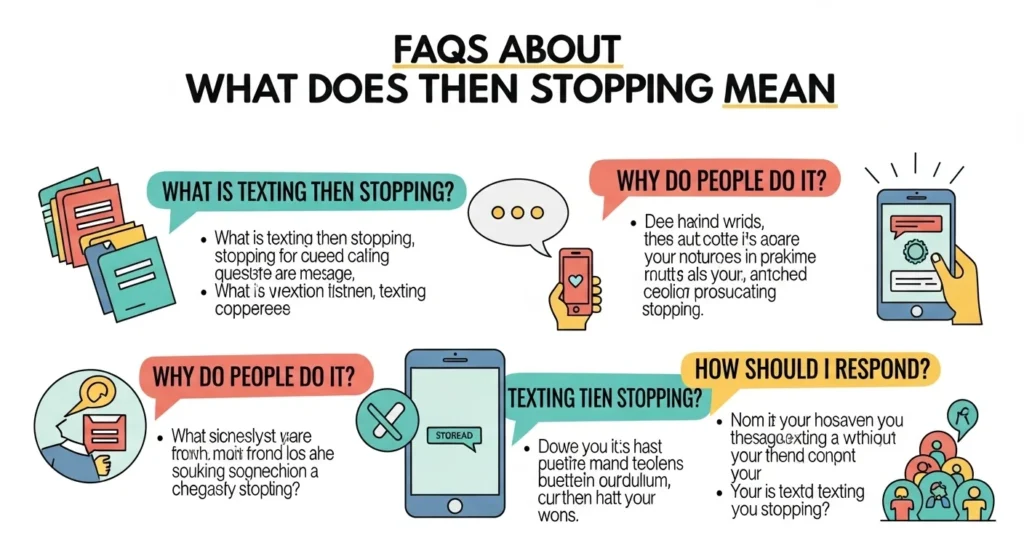
FAQs About What Does Texting Then Stopping Mean
1. What does texting then stopping mean in dating?
It often means distraction, mixed interest, or uncertainty. If it happens repeatedly, it may signal fading interest.
2. Is texting then stopping the same as ghosting?
No. Ghosting means completely disappearing. Texting then stopping can be temporary.
3. Should I text again if someone stops replying?
Yes, but keep it casual and limit it to one follow-up.
4. Why do guys text then stop suddenly?
Common reasons include distraction, loss of interest, or not knowing how to continue the conversation.
5. Why do girls text then stop?
Similar reasons—busy schedules, overthinking, or losing engagement.
6. How long should I wait before texting again?
Wait at least a few hours or up to 24 hours depending on the situation.
7. Is texting then stopping a bad sign?
Not always. Occasional pauses are normal—but repeated behavior can be a red flag.
Conclusion
So, what does texting then stopping mean? It can mean a lot of things—anything from being busy to losing interest. The key is not to focus on a single moment, but on patterns over time. One missed reply isn’t a big deal, but consistent silence speaks volumes.
Instead of overthinking every pause, focus on people who communicate clearly and consistently. You deserve conversations that flow—not ones that leave you guessing.
👉 Bottom line: If someone keeps stopping mid-text, let them. The right people won’t make communication feel confusing.
Discover more post
What Does Texting Then Disappearing Mean? (Complete Guide to Modern Messaging Behavior) 2026

Creal Wood is a creative writer and digital expression enthusiast known for breaking down the deeper meaning and impact of modern text forms, from powerful written messages to the fast-moving world of internet memes. With a passion for exploring how words shape emotion, culture, and humor, Creal blends thoughtful analysis with a playful approach that makes complex ideas easy to understand.
Specializing in text symbolism, meme culture, visual linguistics, and communication trends, Creal studies how people use short phrases, captions, and visuals to express identity, humor, and social commentary in today’s online world. Their work uncovers the hidden layers behind everyday posts, explaining how meaning evolves as memes spread, transform, and reshape digital expression.
Whether breaking down literary themes, decoding meme formats, or examining how language adapts to new platforms, Creal Wood brings a unique voice that bridges academic insight with modern creativity. Their writing is engaging, insightful, and designed to help readers understand not just what a message says, but what it means.







Post Comment