What Does Using Your Name in Texts Mean? (Complete Guide to Tone, Psychology & Hidden Signals) 2026

Ever noticed someone casually dropping your name into a text like, “Hey Alex, I miss you,” instead of just “I miss you”? It might seem small, but it actually carries more meaning than you think. What does using your name in texts mean isn’t just a random texting habit—it can signal emotion, intention, and even relationship dynamics.
From flirting and affection to subtle manipulation or emphasis, the way someone uses your name in messages can change the tone completely. In this guide, you’ll learn the psychology behind it, real-life examples, and how to interpret it correctly—especially in today’s fast-paced, emoji-filled conversations. Whether you’re texting a crush, friend, or coworker, understanding this nuance can help you read between the lines like a pro.
What Does Using Your Name in Texts Mean? (Definition & Basics)
At its core, using your name in texts means the sender is intentionally personalizing the message. Instead of a generic statement, your name makes the message feel more direct and emotionally targeted.
Why People Use Names in Texts
- To grab attention in a crowded chat
- To add emotional weight
- To make the message feel personal
- To emphasize seriousness or intimacy
Simple Breakdown Table
| Situation | Meaning |
|---|---|
| “Hey John 😊” | Friendly, warm greeting |
| “John, we need to talk” | Serious or urgent tone |
| “I miss you, John” | Emotional or romantic |
| “Listen, John…” | Authority or frustration |
👉 The same sentence can feel completely different depending on whether your name is included.
The Psychology Behind Using Your Name in Text Messages
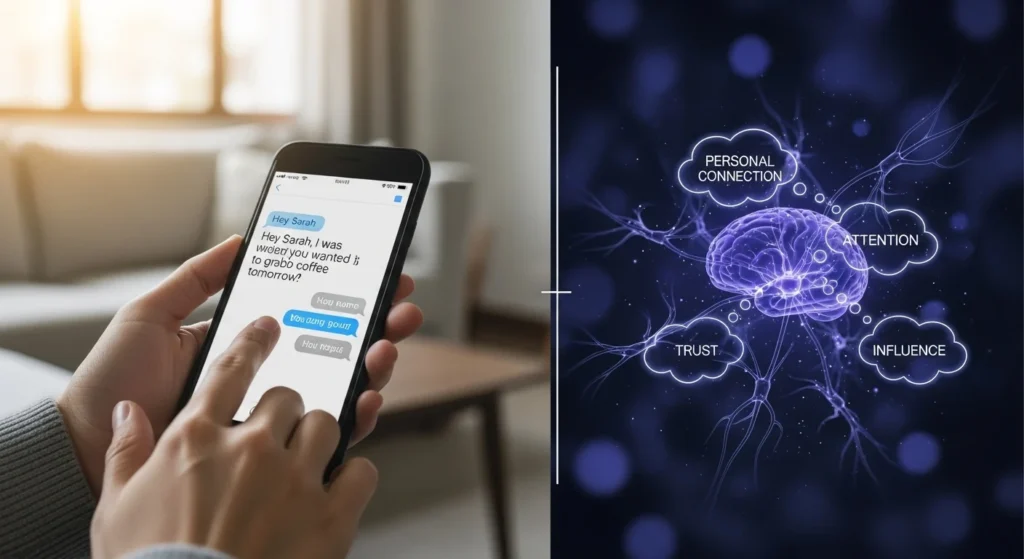
Understanding what using your name in texts means psychologically helps decode intent more accurately.
1. The “Attention Trigger” Effect
Hearing or seeing your name activates your brain instantly. It’s one of the strongest attention cues humans respond to.
👉 That’s why messages with your name feel:
- More important
- Harder to ignore
- More engaging
2. Emotional Connection & Bonding
Using your name can signal closeness or intimacy. People naturally use names more when they:
- Care about you
- Want to build rapport
- Feel emotionally connected
3. Power & Control Signals
Sometimes, using your name can feel intense or even controlling.
Example:
“Emma, I told you not to do that.”
This can come off as:
- Authoritative
- Slightly aggressive
- Emotionally charged
4. Persuasion Technique
Marketers and influencers often use names because it increases trust and response rates.
👉 In texting, this can translate to:
- Trying to convince you
- Seeking attention or validation
- Soft manipulation (in some cases)
What Does Using Your Name in Texts Mean in Different Situations?
The meaning changes depending on context. Let’s break down common scenarios.
When a Crush Uses Your Name in Texts
This is one of the most searched variations of what does it mean when someone uses your name in texts.
Possible meanings:
- They like you and want to sound more personal
- They’re flirting subtly
- They’re trying to stand out
Example:
“Goodnight, Sarah ❤️”
👉 Adding your name makes it feel more intimate than just “Goodnight ❤️”
When a Friend Uses Your Name in Texts
Usually harmless, but still meaningful.
Common reasons:
- Playfulness
- Emphasis in jokes
- Mock seriousness
Example:
“Bro, Jake, you really did that?? 😂”
When Someone Uses Your Name in Arguments
This is where tone matters the most.
It may signal:
- Frustration
- Authority
- Emotional intensity
Example:
“Listen, Mike, this isn’t funny anymore.”
👉 Your name here adds weight and seriousness.
When Someone Uses Your Name Repeatedly
If someone keeps using your name in every message, it can feel unusual.
Possible interpretations:
- They’re trying too hard to connect
- They’re nervous or awkward
- They’re being overly formal
- In rare cases, manipulative behavior
Real-Life Examples & Mini Conversations

Example 1: Flirty Texting
Them: “Hey Lily, you looked amazing today 😍”
👉 Meaning: Attraction + personalization
Example 2: Emotional Moment
Them: “I miss you, Daniel.”
👉 Meaning: Deep emotional connection
Example 3: Serious Tone
Them: “Chris, we need to talk.”
👉 Meaning: Something important or tense
Example 4: Friendly Humor
Them: “Relax, Emily, it’s not that serious 😂”
👉 Meaning: Light teasing
Benefits of Using Names in Text Messages
Using names isn’t just about style—it has real communication benefits.
Why It Works So Well
- Creates instant connection
- Makes messages memorable
- Adds emotional clarity
- Reduces misunderstanding
When You Should Use It
Use someone’s name when:
- You want to sound sincere
- You’re apologizing
- You’re expressing feelings
- You want attention
How to Use Someone’s Name in Texts (Without Being Weird)
Yes, there’s a right way to do it.
Smart Tips for Using Names Naturally
- Don’t overuse it
- Sounds robotic if repeated too much
- Match the tone
- Casual chat = use sparingly
- Emotional message = more effective
- Use it for emphasis
- Works best in key moments
- Keep it authentic
- If it feels forced, it probably is
Good vs Bad Usage
| Good Usage | Bad Usage |
|---|---|
| “Hey Anna, can we talk?” | “Hey Anna, how are you Anna?” |
| “I appreciate you, Mark.” | “Mark, Mark, Mark…” |
| “Thanks, Jess!” | Overusing in every sentence |
Common Mistakes When Using Names in Text Messages
Even a small detail like this can go wrong.
Mistakes to Avoid
- Overusing names → Feels unnatural
- Using names in conflict too aggressively → Can escalate tension
- Sounding robotic or scripted
- Using full names unnecessarily (can feel formal or cold)
👉 Example mistake:
“Hello John Smith, how are you doing today?”
Feels like an email, not a text.
FAQs About What Does Using Your Name in Texts Mean
1. What does it mean when someone uses your name in texts a lot?
It usually means they’re trying to create a stronger connection or get your attention. However, if it’s excessive, it might feel unnatural or forced.
2. Is using your name in texts flirting?
Sometimes, yes. When combined with compliments or emojis, it can signal attraction and personal interest.
3. Why does using my name in texts feel intense?
Because your brain is wired to respond strongly to your name, making messages feel more personal and emotional.
4. What does it mean when a guy uses your name in texts?
It can indicate interest, emphasis, or emotional engagement depending on the tone and context of the message.
5. Is it manipulative to use someone’s name in texting?
Not usually. But in some cases, it can be used intentionally to influence or persuade, especially if combined with emotional language.
6. Should I use someone’s name when texting them?
Yes—but in moderation. It works best in meaningful or emotional messages rather than casual back-and-forth chats.
Conclusion
So, what does using your name in texts mean? It’s a small detail with big impact. Whether it signals affection, seriousness, or emphasis, adding your name changes how a message feels and how it’s received.
The key takeaway: context is everything. A name can make a message warmer, more intense, or even more persuasive depending on how it’s used. If you pay attention to tone, frequency, and situation, you’ll start picking up on these subtle texting signals effortlessly.
👉 Next time someone uses your name in a text, don’t just read it—read into it.
Discover more post
What Does Calling You Nicknames Mean? A Complete Guide to Understanding the Hidden Signals 2026

Creal Wood is a creative writer and digital expression enthusiast known for breaking down the deeper meaning and impact of modern text forms, from powerful written messages to the fast-moving world of internet memes. With a passion for exploring how words shape emotion, culture, and humor, Creal blends thoughtful analysis with a playful approach that makes complex ideas easy to understand.
Specializing in text symbolism, meme culture, visual linguistics, and communication trends, Creal studies how people use short phrases, captions, and visuals to express identity, humor, and social commentary in today’s online world. Their work uncovers the hidden layers behind everyday posts, explaining how meaning evolves as memes spread, transform, and reshape digital expression.
Whether breaking down literary themes, decoding meme formats, or examining how language adapts to new platforms, Creal Wood brings a unique voice that bridges academic insight with modern creativity. Their writing is engaging, insightful, and designed to help readers understand not just what a message says, but what it means.









Post Comment