What Does Changing Tone in Texting Mean? A Complete Guide for Beginners & Gen Z 2026
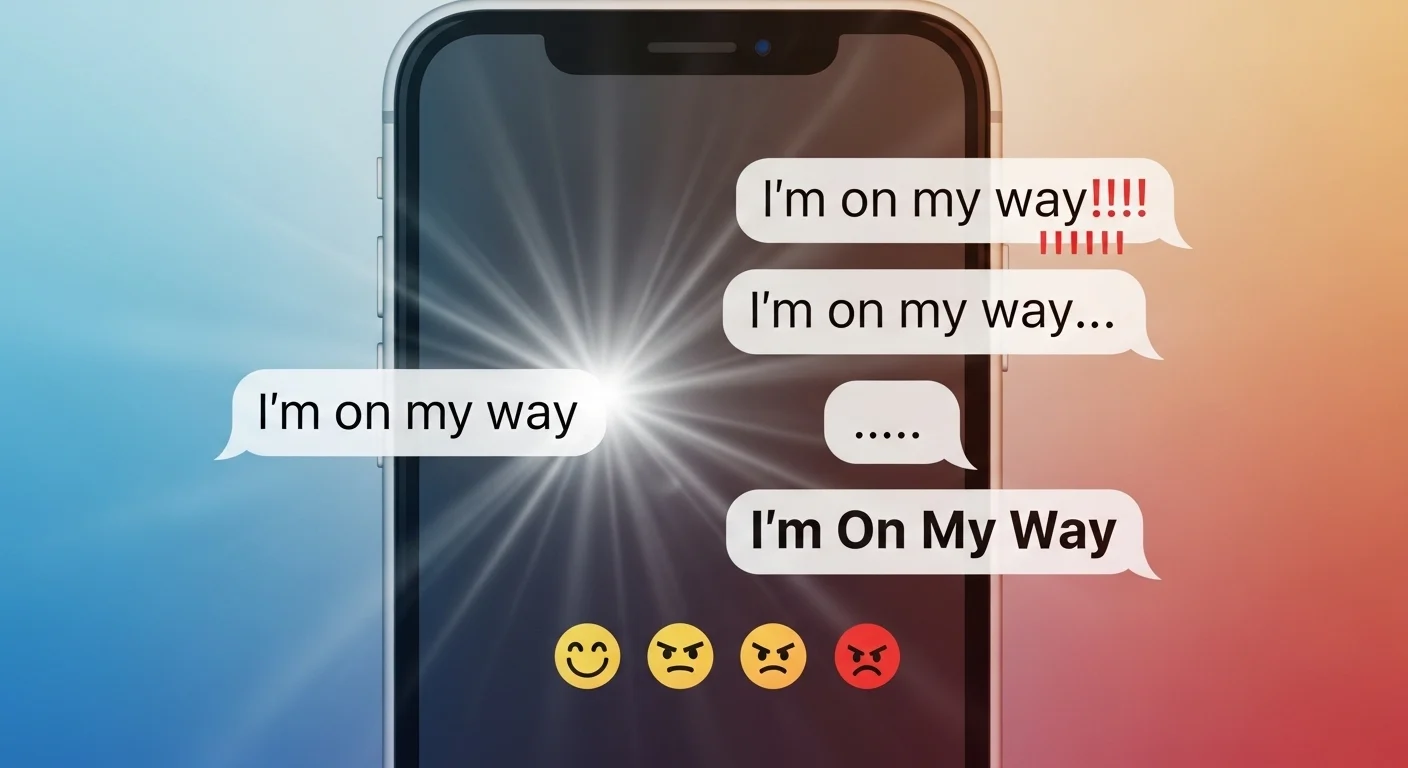
Ever sent a message that sounded totally fine in your head—but came off cold, sarcastic, or even rude? You’re not alone. Understanding what does changing tone in texting mean is one of the most important (and underrated) digital communication skills today.
In texting, tone isn’t carried by voice, facial expressions, or body language—so even small shifts in wording, punctuation, or emoji use can completely change how your message is interpreted. A simple “okay” can feel supportive, dismissive, or passive-aggressive depending on context.
In this guide, we’ll break down what changing tone in texting really means, why it happens, how to spot it, and how to use it effectively—whether you’re chatting with friends, flirting, or just trying to avoid awkward misunderstandings.
What Does Changing Tone in Texting Mean?
At its core, changing tone in texting refers to a noticeable shift in how a message feels emotionally or socially—without necessarily changing the meaning of the words themselves.
H3: Simple Definition
Tone in texting = the emotional vibe behind your message.
Changing tone means that vibe suddenly shifts.
H3: Example of Tone Shift
- “That’s fine 😊” → friendly, positive
- “That’s fine.” → neutral or slightly cold
- “That’s fine…” → suspicious or passive-aggressive
Same words. Totally different feelings.
H3: Why Tone Matters in Texting
Unlike face-to-face conversations, texting lacks:
- Vocal tone
- Facial expressions
- Immediate feedback
So, tone becomes inferred, not obvious—which makes it easy to misinterpret.
Why Changing Tone in Texting Happens
Understanding why tone changes in texting can help you avoid confusion and unnecessary drama.
1. Mood Changes
People’s emotions shift quickly. Someone might start a conversation upbeat and then become distracted, tired, or annoyed.
Example:
- “Haha that’s hilarious 😂”
- “yeah”
That drop in energy signals a tone shift.
2. Misinterpretation
Sometimes tone changes because the receiver reads it differently than intended.
Example:
- Sender: “ok” (just confirming)
- Receiver: “Why are you mad??”
3. Lack of Context
Short texts can feel blunt without context.
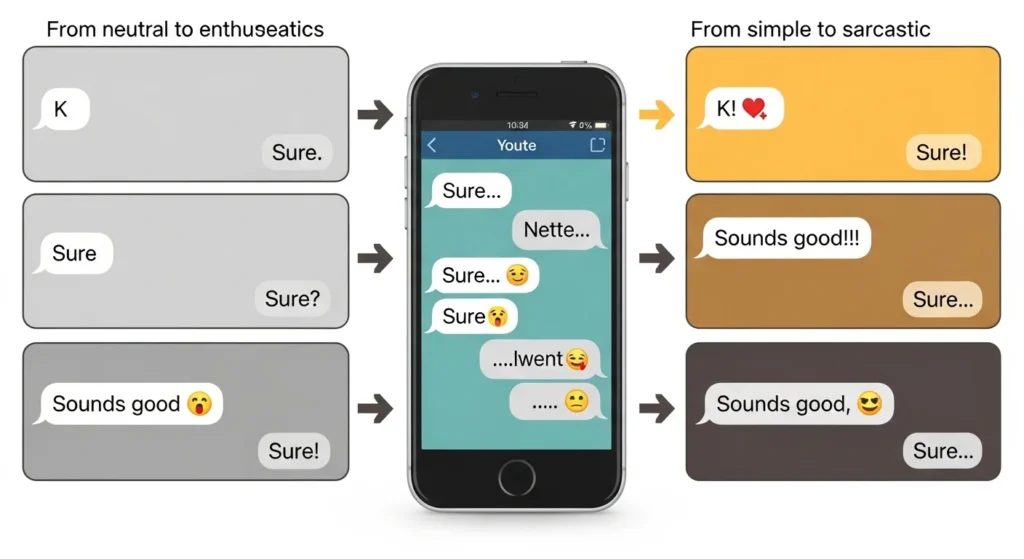
| Message | Possible Tone Interpretations |
|---|---|
| “Sure.” | Neutral, annoyed, or sarcastic |
| “Cool” | Chill or uninterested |
| “K” | Dismissive or passive |
4. Intentional Tone Shift
Sometimes people change tone on purpose to:
- Show irritation
- Create distance
- Be sarcastic
- Flirt or tease
5. Overuse or Lack of Emojis
Emojis act like tone indicators.
- “I’m fine” → sounds serious
- “I’m fine 😂” → sounds playful
Common Examples of Changing Tone in Texting
Let’s look at real-life scenarios so you can recognize tone shifts instantly.
Example 1: Friendly → Cold
Conversation:
- A: “Hey! What are you doing later?”
- B: “Nothing much, you?”
- A: “Wanna hang out?”
- B: “idk”
👉 Tone shift: Interested → uninterested
Example 2: Playful → Passive-Aggressive
- “You forgot again 😂”
- “You always forget.”
👉 Tone shift: joking → accusatory
Example 3: Engaged → Dry Replies
- “That’s so cool!! Tell me more!”
- “nice”
👉 Tone shift: excited → disengaged
Example 4: Neutral → Flirty
- “You’re funny”
- “You’re kinda cute too 😏”
👉 Tone shift: casual → flirty
Example 5: Supportive → Distant
- “I got you, don’t worry ❤️”
- “Do whatever you want.”
👉 Tone shift: caring → detached
How to Recognize Changing Tone in Texting
If you’ve ever wondered “why does their texting tone feel different?”, here are clear signs.
Key Signs to Watch For
- Shorter replies (e.g., from paragraphs to one-word answers)
- Less enthusiasm (fewer emojis, exclamation marks)
- Delayed responses
- More formal language
- Sudden bluntness
Tone Shift Cheat Sheet
| Before | After | What It Might Mean |
|---|---|---|
| “Yesss!!! 😍” | “yeah” | Lost excitement |
| “Haha that’s funny 😂” | “ok” | Disengaged |
| “I miss you ❤️” | “same” | Less emotional effort |
How to Use Changing Tone in Texting Effectively
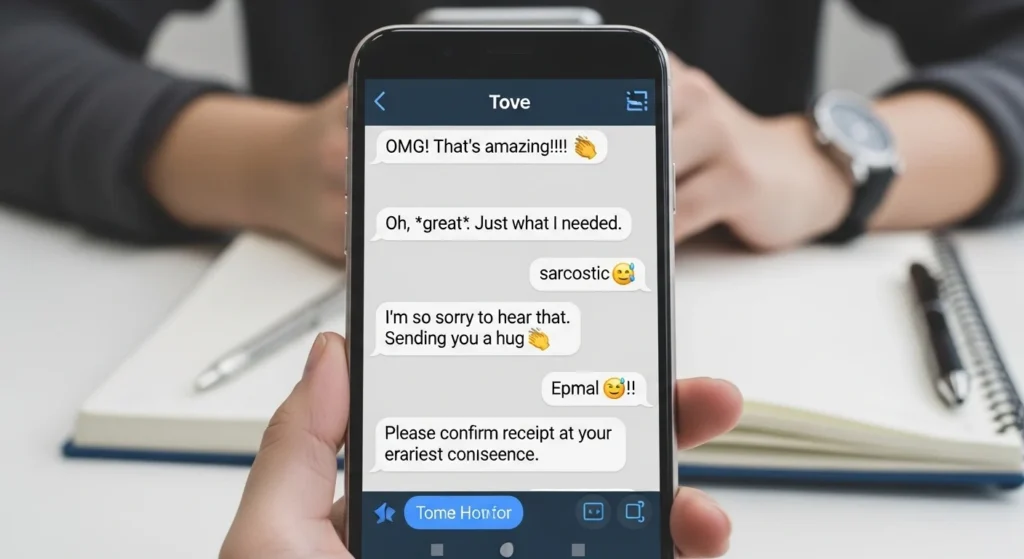
Tone shifts aren’t always bad—you can use them strategically.
1. Match the Conversation Energy
If someone texts casually, don’t overdo it.
Tip:
Mirror their tone (not mimic, just align).
2. Use Emojis Wisely
Emojis help clarify tone.
- Use 😊 to soften messages
- Use 😂 for humor
- Avoid overusing 😒 or 😑 unless intentional
3. Be Clear When It Matters
If a message could be misunderstood, add context.
Example:
Instead of: “fine”
Say: “I’m good, just tired today!”
4. Don’t Overanalyze Everything
Not every tone shift means something deep.
Sometimes:
- They’re busy
- They’re tired
- They forgot to respond fully
5. Ask Instead of Assuming
If tone feels off:
Example:
“Hey, did I say something wrong?”
Simple, direct, and drama-free.
Common Mistakes When Interpreting Tone in Texting
Understanding what does changing tone in texting mean also means knowing what not to do.
Mistake 1: Overthinking Short Replies
“K” doesn’t always mean anger—it can just mean “okay.”
Mistake 2: Ignoring Context
Tone depends on:
- Relationship
- Situation
- Timing
Mistake 3: Assuming the Worst
Jumping to conclusions can create unnecessary conflict.
Mistake 4: Using Tone to Avoid Communication
Passive-aggressive tone shifts (like going dry) don’t solve problems.
Mistake 5: Overusing Sarcasm
Sarcasm rarely translates well in text unless clearly marked.
FAQs About Changing Tone in Texting
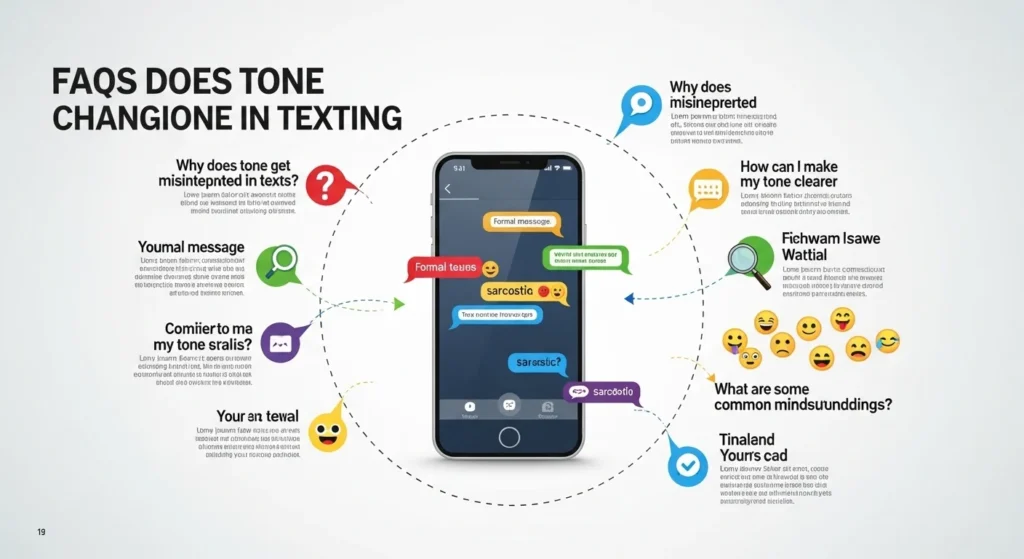
1. What does changing tone in texting mean in relationships?
It often signals emotional shifts—like losing interest, feeling upset, or becoming distant. However, it can also just reflect mood changes or external stress.
2. Why does someone’s tone suddenly change over text?
Common reasons include being busy, losing interest, feeling annoyed, or simply miscommunication.
3. Is a dry tone always a bad sign?
No. A dry tone can mean:
- They’re tired
- They’re distracted
- They’re not big on texting
4. How can I tell if someone is mad through text?
Look for patterns:
- Short replies
- No emojis
- Delayed responses
- Blunt wording
5. Can tone in texting be misunderstood?
Absolutely. Since tone isn’t explicit, it’s one of the most commonly misunderstood aspects of texting.
6. How do I fix a bad tone in texting?
- Clarify your message
- Add emojis or context
- Communicate directly
7. What does a sudden tone shift mean in texting from a crush?
It could mean:
- Nervousness
- Loss of interest
- Mixed feelings
But don’t assume—context matters.
Conclusion
So, what does changing tone in texting mean? It’s essentially a shift in emotional expression through text—often subtle, sometimes confusing, but always important.
Tone can turn a simple message into something warm, cold, sarcastic, or flirty—all depending on how it’s written and interpreted. The key is to stay aware, avoid overthinking, and communicate clearly when needed.
If you’ve ever been confused by a message, you’re not alone—texting tone is a skill everyone is still figuring out. Keep practicing, stay mindful, and when in doubt… just ask.
Discover more post
What Does Typing in Lowercase Mean? A

Creal Wood is a creative writer and digital expression enthusiast known for breaking down the deeper meaning and impact of modern text forms, from powerful written messages to the fast-moving world of internet memes. With a passion for exploring how words shape emotion, culture, and humor, Creal blends thoughtful analysis with a playful approach that makes complex ideas easy to understand.
Specializing in text symbolism, meme culture, visual linguistics, and communication trends, Creal studies how people use short phrases, captions, and visuals to express identity, humor, and social commentary in today’s online world. Their work uncovers the hidden layers behind everyday posts, explaining how meaning evolves as memes spread, transform, and reshape digital expression.
Whether breaking down literary themes, decoding meme formats, or examining how language adapts to new platforms, Creal Wood brings a unique voice that bridges academic insight with modern creativity. Their writing is engaging, insightful, and designed to help readers understand not just what a message says, but what it means.






Post Comment