What Does Heart Reaction Mean in Texting? A Complete Guide to ❤️ in Messages 2026
Ever received a ❤️ on your message and paused to wonder what it really meant? You’re not alone. In today’s fast-paced digital world, reactions have become a language of their own—and the heart reaction is one of the most commonly used (and misunderstood).
So, what does heart reaction mean in texting? Depending on the context, it can signal love, appreciation, agreement, or even subtle flirting. Whether you’re chatting with friends, texting a crush, or messaging coworkers, understanding this simple symbol can save you from confusion—or awkward misinterpretations.
This guide breaks down everything you need to know about heart reactions in texting, including meanings, variations, examples, and tips to use them like a pro.
What Does Heart Reaction Mean in Texting? (Core Meaning Explained)
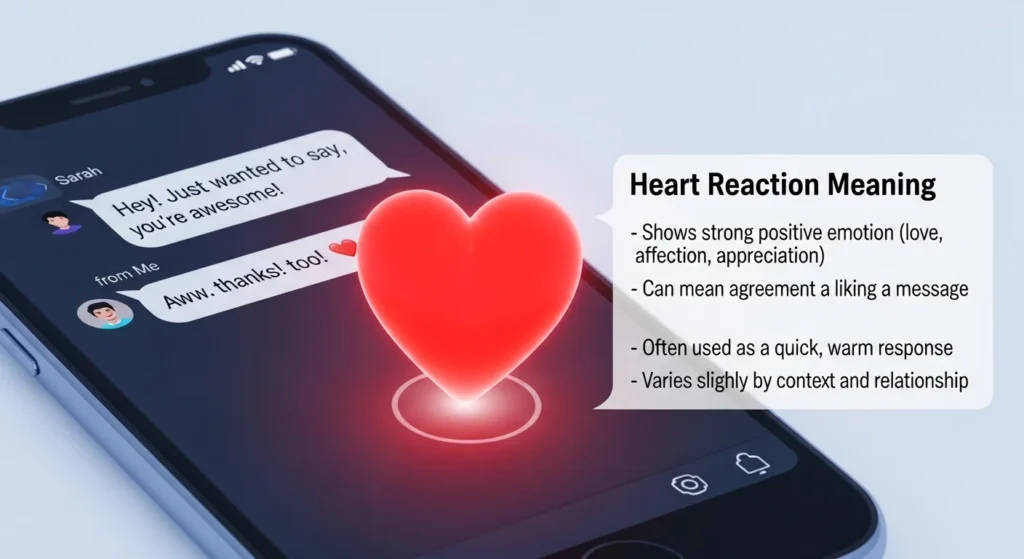
At its simplest, a heart reaction in texting is a way to express positive emotion without typing a full reply. It’s quick, visual, and emotionally loaded.
Common Meanings of a Heart Reaction
Here’s what a ❤️ usually communicates:
- Love or affection – Romantic or friendly
- Appreciation – “I like this message”
- Agreement – “I feel the same”
- Support – “I’m here for you”
- Acknowledgment – “I saw this and it matters”
Why People Use Heart Reactions Instead of Words
- Saves time (no need to type)
- Feels warmer than a simple “ok”
- Avoids awkward or long replies
- Keeps conversations flowing casually
Key takeaway: The meaning depends heavily on who sent it and what message it reacted to.
Different Meanings of Heart Reaction in Texting Based on Context
Understanding what a heart reaction means in texting from a guy or girl requires looking at context. The same ❤️ can mean very different things depending on the situation.
❤️ From a Friend
- Friendly appreciation
- Emotional support
- “That’s sweet” or “I care”
Example:
You: “Thanks for helping me today!”
Friend: ❤️
👉 Meaning: Gratitude and warmth
❤️ From a Crush or Romantic Interest
- Flirting signal
- Emotional interest
- Soft way of saying “I like you”
Example:
You: “I had a great time with you today.”
Crush: ❤️
👉 Meaning: Likely romantic interest
❤️ From a Guy vs. From a Girl
| Sender | Possible Meaning |
|---|---|
| Guy | Interest, appreciation, or subtle flirting |
| Girl | Warmth, friendliness, or affection (not always romantic) |
Tip: Guys tend to use ❤️ more selectively, while girls may use it more casually.
❤️ In Group Chats
- Agreement with a message
- Showing support without interrupting
- Reacting to something funny or wholesome
❤️ In Professional or Casual Contexts
- Appreciation (but less common)
- Positive acknowledgment
⚠️ In work settings, it may feel too personal—use cautiously.
What Does Different Heart Reactions Mean in Texting?
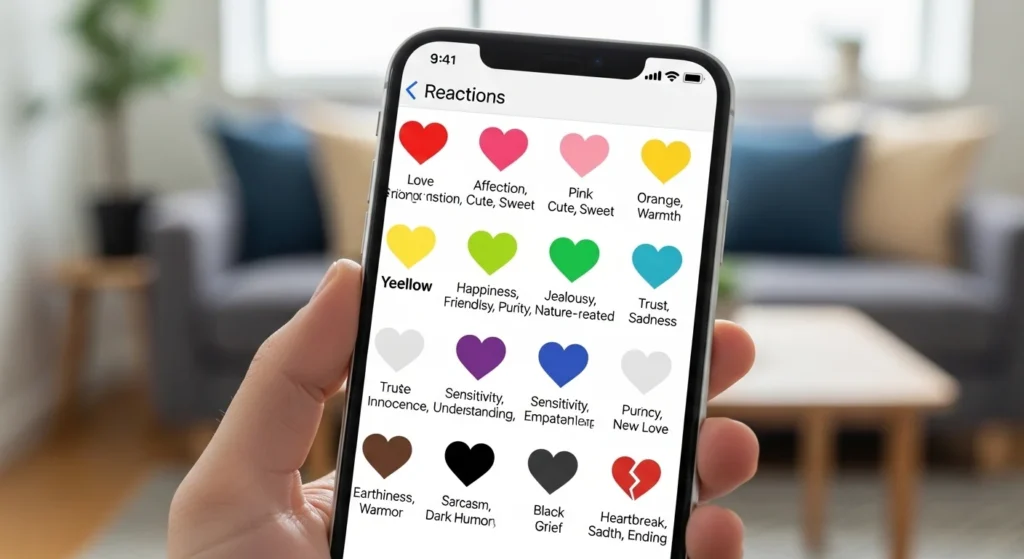
Not all hearts are created equal. Emoji colors matter—a lot.
❤️ Heart Emoji Meanings Table
| Emoji | Meaning | Best Use |
|---|---|---|
| ❤️ Red Heart | Love, strong affection | Romantic or close relationships |
| 💛 Yellow Heart | Friendship, positivity | Friends, casual chats |
| 💙 Blue Heart | Trust, loyalty | Close friends, emotional support |
| 💚 Green Heart | Jealousy or nature vibes | Situational use |
| 🖤 Black Heart | Humor, sarcasm, dark aesthetic | Gen Z humor, edgy tone |
| 🤍 White Heart | Pure love, peace | Gentle or supportive tone |
| 💜 Purple Heart | Admiration, care | Friends or fandoms |
Quick Insight
- Red = emotional intensity
- Yellow = safe and friendly
- Black = humor or irony
Real-Life Examples of Heart Reaction in Texting
Let’s break down how this plays out in everyday conversations.
Example 1: Casual Friendship
You: “I got the job!”
Friend: ❤️
👉 Meaning: Proud and happy for you
Example 2: Flirty Situation
You: “You looked really good today.”
Them: ❤️
👉 Meaning: They liked the compliment (and maybe you)
Example 3: Emotional Support
You: “Today was really tough…”
Friend: ❤️
👉 Meaning: Silent support and empathy
Example 4: Low-Effort Reply
You: “Here’s the info you asked for.”
Them: ❤️
👉 Meaning: Acknowledged, thanks
Example 5: Mixed Signals
You: “I miss you.”
Them: ❤️
👉 Meaning: Could be affection… or just politeness
⚠️ Context is everything here
Benefits of Using Heart Reactions in Texting
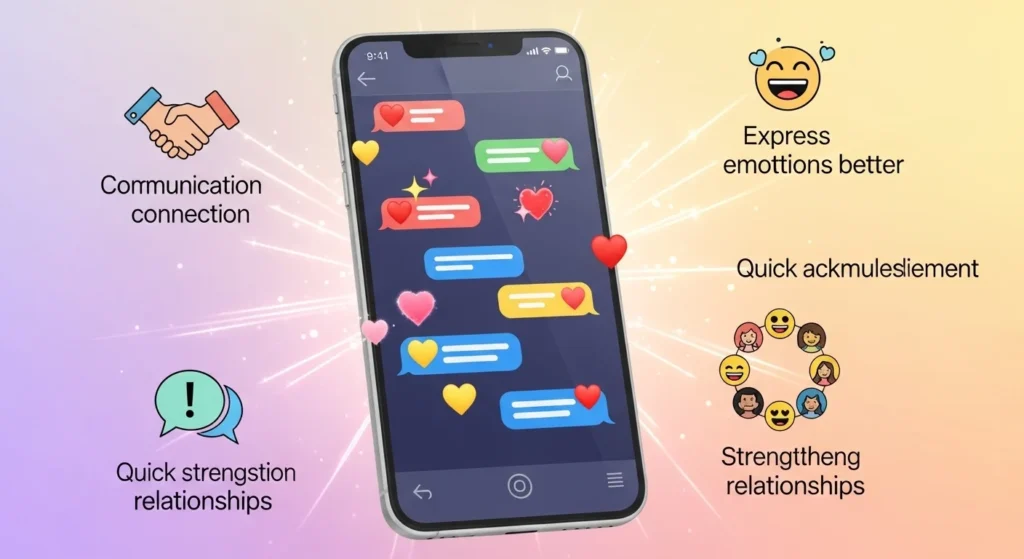
Using heart reactions isn’t just convenient—it actually improves communication.
Why Heart Reactions Work So Well
- Quick emotional expression
- Reduces misunderstandings (sometimes)
- Adds warmth to digital conversations
- Helps shy people express feelings
- Keeps chats light and engaging
For Gen Z Users
Heart reactions are part of “low-effort, high-impact” texting—saying more with less.
How to Use Heart Reactions in Texting (Best Practices)
Knowing what does heart reaction mean in texting is only half the game—you also need to use it correctly.
When to Use ❤️
- When you genuinely like a message
- To show appreciation
- To subtly flirt
- To support someone emotionally
When NOT to Use ❤️
- In formal/professional conversations
- When clarity is needed (use words instead)
- Too frequently (can lose meaning)
Pro Tips for Using Heart Reactions
- Match the vibe – Don’t overdo it if the other person isn’t
- Consider your relationship – Friend vs. crush matters
- Use different colors wisely
- Don’t rely only on reactions – Mix with actual replies
- Watch patterns – Repeated ❤️ can signal deeper interest
Common Mistakes People Make with Heart Reactions
Even simple emojis can cause confusion.
Mistakes to Avoid
- Overanalyzing every ❤️
- Assuming romantic intent immediately
- Using ❤️ in professional chats
- Sending mixed signals unintentionally
- Ignoring context of the message
Reality Check
A heart reaction is meaningful—but not always that deep.
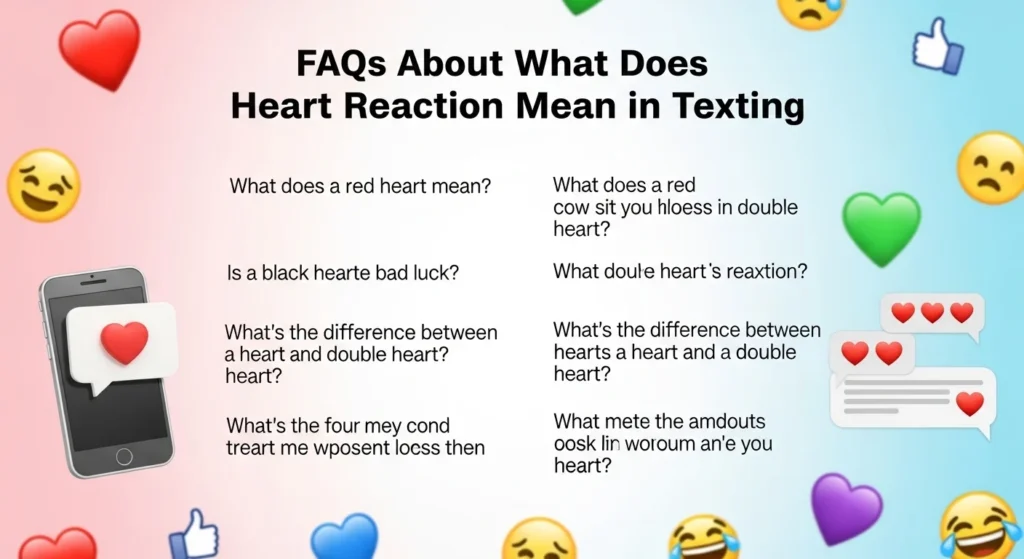
FAQs About What Does Heart Reaction Mean in Texting
1. What does heart reaction mean in texting from a guy?
It often indicates interest, appreciation, or subtle flirting—but context matters.
2. What does a heart reaction mean on iMessage or Instagram?
It typically means “I like/love this message” and serves as a quick emotional response.
3. Is a heart reaction always romantic?
No. It can be friendly, supportive, or simply appreciative.
4. What does it mean when someone reacts with ❤️ but doesn’t reply?
It usually means acknowledgment without continuing the conversation.
5. What does heart reaction mean in texting from a girl?
Often friendly and warm, but can also signal affection depending on context.
6. Why do people use heart reactions instead of replying?
To save time, avoid awkward replies, or keep communication simple.
7. Can a heart reaction be a red flag?
Only if it replaces meaningful communication or creates confusion consistently.
Conclusion
So, what does heart reaction mean in texting? In most cases, it’s a simple but powerful way to show appreciation, affection, or agreement. But like all digital communication, its true meaning depends on context, relationship, and timing.
Instead of overthinking every ❤️, focus on patterns and overall conversation tone. Used wisely, heart reactions can make your texting style feel warmer, smoother, and more expressive.
Discover more post
What Does Reacting to Messages Mean? A Complete

Creal Wood is a creative writer and digital expression enthusiast known for breaking down the deeper meaning and impact of modern text forms, from powerful written messages to the fast-moving world of internet memes. With a passion for exploring how words shape emotion, culture, and humor, Creal blends thoughtful analysis with a playful approach that makes complex ideas easy to understand.
Specializing in text symbolism, meme culture, visual linguistics, and communication trends, Creal studies how people use short phrases, captions, and visuals to express identity, humor, and social commentary in today’s online world. Their work uncovers the hidden layers behind everyday posts, explaining how meaning evolves as memes spread, transform, and reshape digital expression.
Whether breaking down literary themes, decoding meme formats, or examining how language adapts to new platforms, Creal Wood brings a unique voice that bridges academic insight with modern creativity. Their writing is engaging, insightful, and designed to help readers understand not just what a message says, but what it means.







Post Comment