What Does One Word Replies Mean? A Complete Guide to Texting Behavior 2026
Ever sent a message and got a reply like “ok,” “k,” or “fine”? You’re not alone—and yes, it can feel confusing, awkward, or even frustrating. So, what does one word replies mean in texting and online conversations?
In today’s fast-paced digital world, communication has evolved into quick, bite-sized interactions. One word replies have become a common part of texting culture, especially among Gen Z and busy professionals. But these short responses can carry multiple meanings depending on context, tone, and relationship dynamics.
In this guide, we’ll break down everything you need to know about one word replies—from their meaning and psychology to real-life examples, mistakes to avoid, and how to respond smartly.
What Does One Word Replies Mean in Texting?
Definition and Basic Meaning
At its core, one word replies are short responses consisting of a single word—like “yes,” “no,” “ok,” “cool,” or “sure.” While they seem simple, their meaning isn’t always straightforward.
Key idea:
A one word reply is less about the word itself and more about the intent behind it.
Common Interpretations
Depending on the situation, one word replies can mean:
- Agreement: “Okay,” “sure”
- Disinterest: “k,” “fine”
- Busy or distracted: “later,” “busy”
- Emotional distance: “whatever”
- Neutral response: “cool,” “nice”
Why Context Matters
The same word can mean completely different things:
Example:
- “Okay 😊” → Friendly and positive
- “Okay.” → Neutral or slightly cold
- “K” → Possibly annoyed or uninterested
Why Do People Send One Word Replies?

Understanding why people use them helps decode their meaning.
1. They’re Busy
Sometimes, a short reply is just efficiency.
Example:
You: “Can we talk later?”
Them: “Yes”
No hidden meaning—just quick communication.
2. Lack of Interest
Short replies can signal disengagement.
Example:
You: “How was your day?”
Them: “Fine”
This often indicates they don’t want to continue the conversation.
3. Emotional Distance
People may use one word replies when they’re upset or avoiding deeper conversation.
Example:
You: “Are you okay?”
Them: “Yes”
That “yes” might not actually mean everything is fine.
4. Communication Style Differences
Some people naturally prefer minimal texting.
- Introverts may keep replies short
- Some cultures value direct communication
- Others simply dislike texting
5. Passive-Aggressive Behavior
Let’s be honest—sometimes it is intentional.
Example:
You: “Did I do something wrong?”
Them: “No”
Short, sharp replies can carry emotional weight.
Examples of One Word Replies in Real Conversations
Casual Conversation
You: “Want to grab coffee?”
Them: “Sure”
✔ Meaning: Positive, casual agreement
Awkward Conversation
You: “Did you like the movie?”
Them: “Okay”
⚠ Meaning: Possibly underwhelmed
Romantic Context
You: “I miss you”
Them: “Same”
🤔 Meaning: Could be genuine—or low effort
Argument Situation
You: “We need to talk about this”
Them: “Fine”
🚨 Meaning: Likely frustration or annoyance
Types of One Word Replies and Their Hidden Meanings
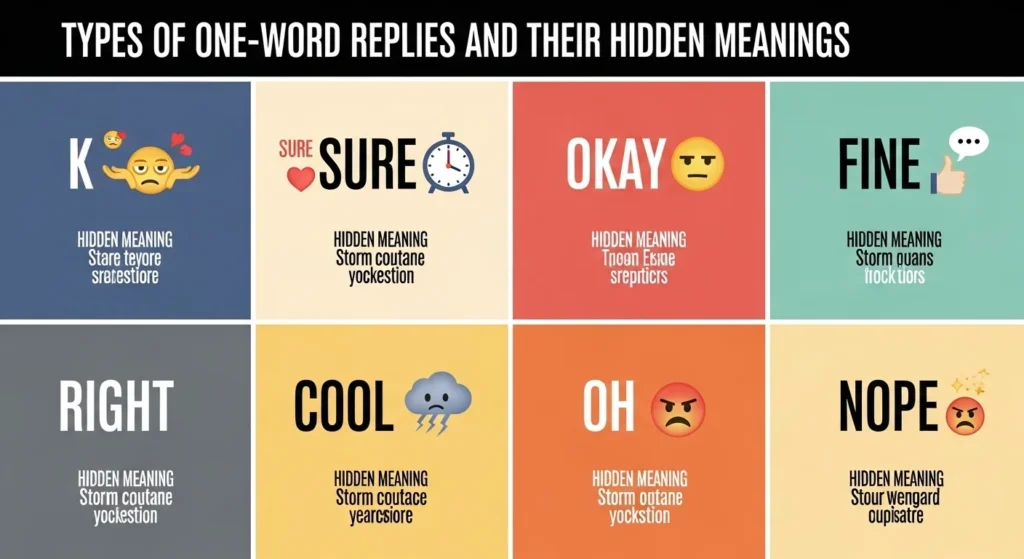
| Reply | Possible Meaning | Tone |
|---|---|---|
| Ok / Okay | Neutral or agreement | Calm |
| K | Disinterest or annoyance | Cold |
| Fine | Defensive or irritated | Negative |
| Sure | Agreeing but not excited | Neutral |
| Cool | Casual approval | Relaxed |
| Whatever | Dismissive | Negative |
How to Respond to One Word Replies (Smartly)
1. Don’t Overreact Immediately
Not every short reply is a red flag.
Tip: Pause and consider context before jumping to conclusions.
2. Ask Open-Ended Questions
Encourage longer responses.
Instead of:
“Did you like it?”
Try:
“What did you like most about it?”
3. Match Their Energy (Carefully)
If someone consistently gives one word replies, don’t over-invest.
4. Call It Out (When Needed)
If it becomes a pattern, address it directly.
Example:
“Hey, your replies feel a bit short—everything okay?”
5. Know When to Stop
If the conversation feels one-sided, it might be time to disengage.
Common Mistakes When Interpreting One Word Replies
❌ Assuming the Worst
Not every “ok” means someone is mad.
❌ Ignoring Context
Tone depends on:
- Relationship
- Timing
- Previous conversation
❌ Overanalyzing Every Message
Sometimes, a short reply is just… a short reply.
❌ Responding Emotionally
Avoid reacting with frustration or sarcasm.
Benefits and Downsides of One Word Replies
Benefits
- Quick and efficient
- Easy to send during busy moments
- Reduces unnecessary texting
Downsides
- Easily misunderstood
- Can seem rude or dismissive
- Limits meaningful conversation
Tips to Avoid Giving Dry One Word Replies
If you don’t want to come off as uninterested:
- Add one extra sentence
- Use emojis to soften tone 😊
- Ask a follow-up question
- Show engagement
Example:
Instead of: “Okay”
Say: “Okay, that sounds good! What time?”
Key Takeaways
- One word replies mean different things depending on context.
- They can signal interest, disinterest, or just being busy.
- Don’t overanalyze—look at the bigger conversation.
- Use open-ended questions to improve communication.
- Balance clarity with efficiency in your own replies.
FAQs About What Does One Word Replies Mean
1. What does one word replies mean in texting?
It usually refers to short responses like “ok” or “fine” that can indicate agreement, disinterest, or emotional distance depending on context.
2. Are one word replies rude?
Not always. They can seem rude if overused, but sometimes they simply reflect a busy schedule or texting style.
3. Why do guys send one word replies?
It can mean they’re busy, uninterested, or just not big on texting. Context and consistency matter more than a single message.
4. Why do girls give one word replies?
Similar reasons—disinterest, mood, or communication style. It’s not gender-specific behavior.
5. How should I respond to one word replies?
Use open-ended questions, stay calm, and avoid overreacting. If it continues, communicate directly.
6. Do one word replies mean someone is not interested?
Sometimes, yes—but not always. Look for patterns rather than judging a single reply.
7. Is “k” worse than “ok”?
Yes, in many contexts. “K” often feels more dismissive or cold than “ok.”
Conclusion
So, what does one word replies mean? The truth is—it depends. These short messages can signal anything from efficiency to emotional distance. The key is to read between the lines, consider context, and avoid jumping to conclusions.
In modern texting culture, clarity beats overthinking. If something feels off, communicate openly instead of guessing. And if you’re the one sending one word replies, remember: a little extra effort can go a long way in keeping conversations meaningful.
Discover more post
What Does Short Replies Mean in Texting? A Complete

Creal Wood is a creative writer and digital expression enthusiast known for breaking down the deeper meaning and impact of modern text forms, from powerful written messages to the fast-moving world of internet memes. With a passion for exploring how words shape emotion, culture, and humor, Creal blends thoughtful analysis with a playful approach that makes complex ideas easy to understand.
Specializing in text symbolism, meme culture, visual linguistics, and communication trends, Creal studies how people use short phrases, captions, and visuals to express identity, humor, and social commentary in today’s online world. Their work uncovers the hidden layers behind everyday posts, explaining how meaning evolves as memes spread, transform, and reshape digital expression.
Whether breaking down literary themes, decoding meme formats, or examining how language adapts to new platforms, Creal Wood brings a unique voice that bridges academic insight with modern creativity. Their writing is engaging, insightful, and designed to help readers understand not just what a message says, but what it means.









Post Comment